

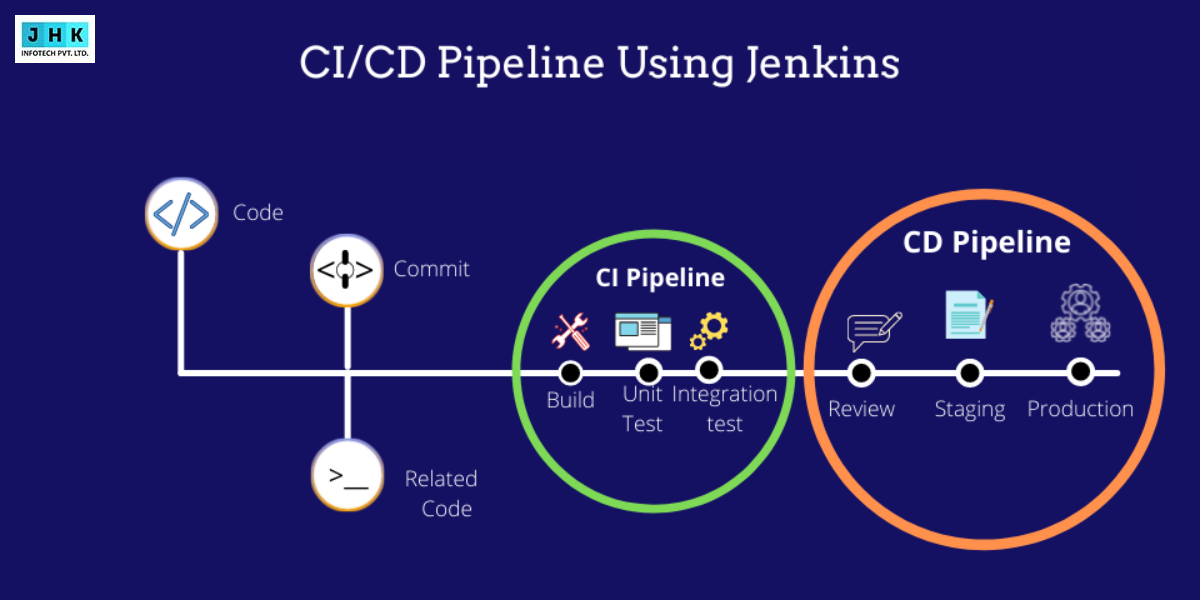
As software development advances, companies are reconsidering the ways in which they create, test, and deploy their applications. Classic CI/CD tools like Jenkins have sufficed for teams for many years, but today’s development requires more scaling, speed, and less infrastructure management. This is why Switching From Jenkins to Cloud-Native CI/CD Tools is a priority for many organizations. For a swift transition the best devops course online offers a comprehensive understanding. In case of devops training with placement,there is a well structured curriculum dealing with tools with hands on experience. Cloud-native CI/CD solutions provide managed infrastructure, better integrations, and quicker setup, making them the logical Jenkins alternative. In this blog article, we’ll discuss Migrating from jenkins to cloud-native CI/CD Tools, what it is, why it is important, and how companies can do it seamlessly.
Why More and More Companies Are Abandoning Jenkins
Jenkins has its strengths and is very versatile, but it does have an overhead in terms of maintenance. Dealing with plugins, server maintenance, infrastructure scaling, and security patches can hamper a team. This is where Migrating from jenkins to cloud-native CI/CD Tools makes sense. Cloud-native solutions also remove a lot of the effort by providing fully managed, auto scaling CI/CD environments.
Typical issues with Jenkins include:
● Expensive to maintain&operate
● Unique plugin dependencies
● Scale manually and tune performance
● Overhead of managing the infrastructure
● These challenges are what-drive teams towards cloud-native solutions.
What Are the Best Cloud-Native CI/CD Tools?
Cloud-native CI/CD tools have been built for these environments and use managed services and contemporary architectures to run fully in cloud. They have native integration with cloud platforms and source code repositories, enabling teams to focus on code, not infrastructure.
When Moving From Jenkins to Cloud-Native CI/CD Tools teams are getting:
WHEN MIGRATING FROM JENKINS TO CLOUD-NATIVE CI/CD TOOLS, TEAMS GAIN:
● Simplifying pipeline setup
● Inherent scalability Is there a need to separately scale the Jenkins implementation to meet demand?
● Increased trustworthiness
● Less maintenance effort
These solutions are a natural fit for DevOps combined with cloud-first.
Benefits of Moving from Jenkins to Cloud-Native CI/CD Tools
1. Simplification Of Infrastructure Management
One of the biggest benefits of Migrating from jenkins to cloud-native CI/CD Tools is eliminating the hassle of managing servers, agents, and plugins. Upgrades, scaling, and availability are managed by cloud providers.
2. Higher Performance and Scalability
Cloud-native CI/CD tools automatically provision to workload scale. Jenkins is notorious for requiring manual management of a build infrastructure, cloud-native platforms easily keep up with spikes in builds.
3. Speedier Time to Value
thanks to prepackaged environments as well as native integrations, teams stop pipelines quickly . It makes Migrating from jenkins to cloud-native CI/CD Tools is a perfect fit for enterprises looking for swift onboarding and productivity.
4. Enhanced Security
Several cloud-native CI/CD tools come with native security capabilities including secret management, role-based access control (RBAC) and compliance assistance capabilities which in many cases need to be configured additionally in Jenkins.
Things to consider prior to moving on
Prior to Migrating from jenkins to cloud-native CI/CD Tools, your environment should be evaluated.
Try to answer the following:
● What is the complexity of your existing pipelines in Jenkins?
● What plugins are essential to your workflows?
● What cloud platforms do you use?
● Do you require hybrid or multi-cloud support?
With a clear understanding of these, you will be able to transition smoothly.
Guide on How to Migrate from Jenkins to Cloud-native CI/CD Tools
Step 1: Audit your existing Jenkins pipelines
Document the pipeline stages, dependencies, plugins and scripts.
Step 2: Select the best cloud-native tool
Choose a platform that suits your repo, cloud provider, and team experience.
Step 3: Rebuild Pipelines Gradually
Don’t move everything at once; transfer pipelines piecemeal to minimize risk.
Step 4: Validate and Optimize
After you migrate, run them with high fidelity and optimize your time to execution.
Step 5: Shut Down Jenkins (or Equivalent)
Begin deprecating your Jenkins infrastructure once you have confidence in its stability.
Doing your own Migrating from jenkins to cloud-native CI/CD Tools following all these steps will make it a lot safer and more predictable.
Frequently Encountered Problems and their Solution Approaches
While Migrating from jenkins to cloud-native CI/CD Tools, the following issues might be encountered by teams:
● Pipeline syntax differences
● Limited plugin equivalents
● Learning curves for new platforms
These issues may be resolved by:
● Refactoring pipelines into reusable components
● Teaching teams or auditing work through new CI/CD workflows
● Temporarily running Jenkins and cloud-native pipelines in parallel
Effect on DevOps and Software Delivery
Successful Migrating from jenkins to cloud-native CI/CD Tools What you can expect Migrating from jenkins to cloud-native CI/CD Tools proven in over 1000 organizations Products
● Faster release cycles
● Reduced operational costs
● More reliable
● Better developer experience
With cloud-native CI/CD, teams can prioritize innovation over maintenance and upkeep.
Conclusion
But times have changed: modern developers want agility, scalability and simplicity. By Migrating from jenkins to cloud-native CI/CD Tools, enterprises can modernize delivery pipelines historically, minimize operational complexity and speed up software delivery.
By planning the migration carefully and embracing cloud-native practices, teams will be able to future-proof their CI/CD workflows and remain competitive as the cloud continues to dominate the world.