
Close Menu
TechLawNews
    Facebook X (Twitter) Instagram
    TechLawNews
    • Home
    • News
    • Tech
    • World
    • Business
    • Social
    TechLawNews
    Home»Blog»New Observatory Surveys Map Faint Galaxies at the Edge of the Visible Universe
    Blog

    New Observatory Surveys Map Faint Galaxies at the Edge of the Visible Universe

    Sergio RuizBy Sergio RuizNovember 10, 2026No Comments3 Mins Read
    Share Facebook Twitter Pinterest Telegram LinkedIn Tumblr Email Copy Link
    Follow Us
    Google News Flipboard
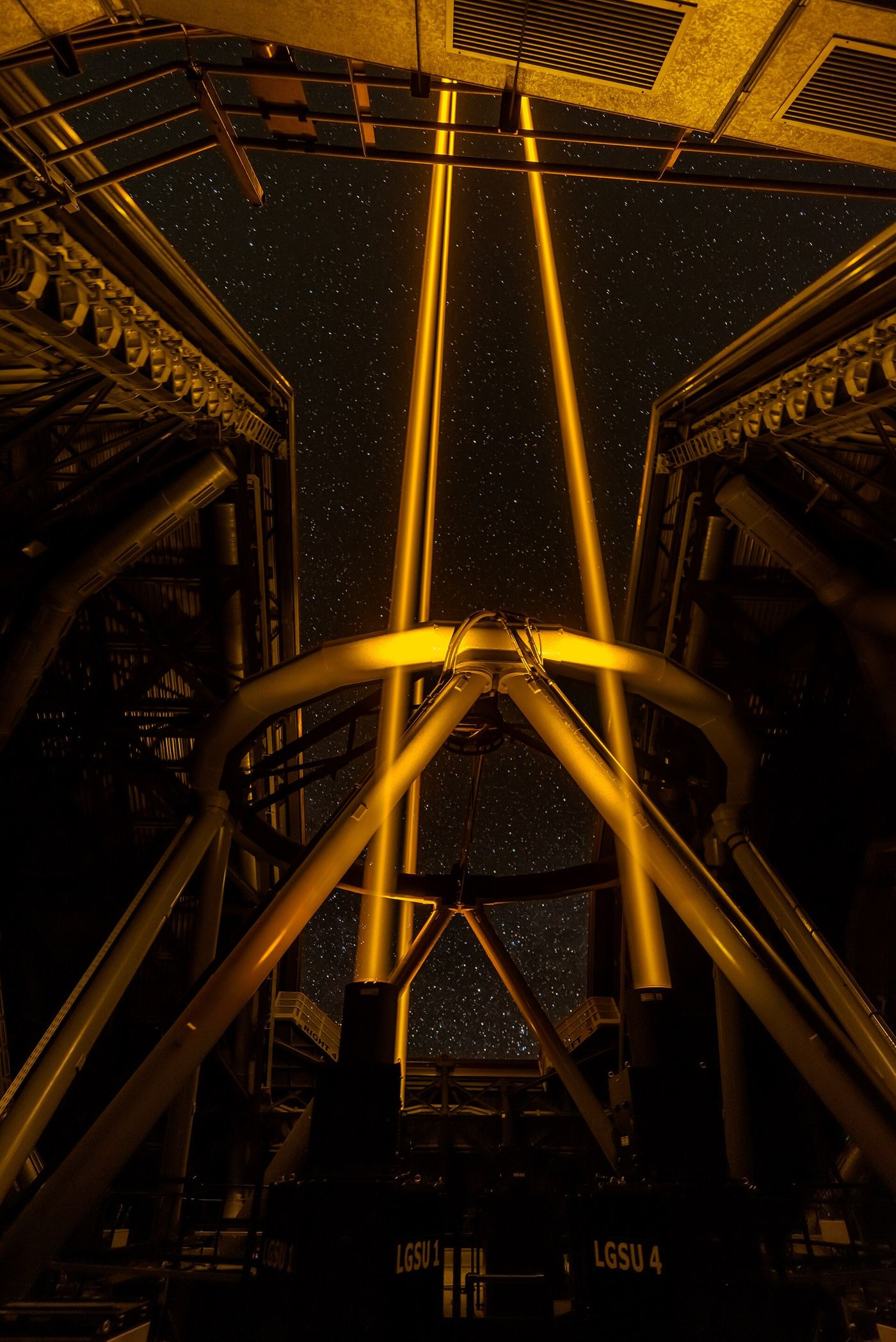
    A telescope points toward a star-filled night sky at an observatory.

    Telescopes on high, dry mountain sites spend clear nights collecting light that has travelled for billions of years, and modern survey programmes are using that light to map galaxies far fainter than earlier catalogues could record. Astronomers are interested in those distant systems because they show the universe at an earlier stage, when stars were forming rapidly and galaxies were still assembling. Each deep image contains thousands of objects, from nearby stars in our own galaxy to remote smudges whose light began its journey long before Earth existed. Turning those images into reliable maps requires careful calibration, repeated observations and software that can separate real galaxies from noise and artefacts. Because the faintest galaxies are so dim, astronomers stack many exposures of the same field and return to it over several seasons, gradually building images deep enough to reveal objects that a single night of observing could never show clearly.

    What the Evidence Shows

    The value of a large survey is that it allows fair comparisons, rather than conclusions drawn from a handful of unusual objects. With bigger samples, researchers can study how galaxy shapes, colours and clustering change over cosmic time, and test whether their models of dark matter and star formation still fit. The catalogues are also shared widely, so other teams can search the same data for rare lenses, distant clusters or changing objects that were not the original target. For the public, the appeal is simpler, in that a single dark patch of sky, observed patiently, turns out to be crowded with entire stellar cities. Those deep fields become reference points for the whole field, used to calibrate newer instruments and to train analysis software, and they remind researchers that progress in astronomy often comes from patient accumulation rather than a single dramatic discovery announcement. Reporting and analysis from sources such as Nature track the same developments, and specialists following faint galaxy surveys say the direction is now consistent across independent lines of evidence.

    The Wider Context

    The wider context is a research landscape in which replication and open data now decide reputations. Findings connected to faint galaxy surveys are being checked by independent groups with shared datasets, and the teams involved publish their methods in full so rivals can test every step. That discipline is slower than a headline cycle, but it is why results in this area increasingly survive first contact with scrutiny.

    What Happens Next

    What happens next in the story of faint galaxy surveys will be decided by follow-up work already under way: larger samples, longer observation and instruments that have not yet come online. The researchers involved are unusually united on one point, that the current results justify the next investment of time and money. Readers will not have to wait long for the first tests of that claim. You can follow related developments in our coverage of science.

    None of this will be settled by a single announcement, study or product launch. The pattern to watch is accumulation: independent confirmations, honest reporting of failures and steady improvement in the underlying numbers. Readers who follow those signals, rather than the loudest claim of the week, will understand this subject better than most of the commentary surrounding it suggests is possible.

    deep space galaxy surveys observatory astronomy
    Sergio Ruiz

    Related Posts

    Best Minimally Invasive Bunion Surgery Options for Active Seniors in Naples FL

    November 9, 2026

    Shadowed Lunar Craters Preserve Water Ice Through the Long Lunar Day

    November 9, 2026

    How to Train Sports Vision Using Multisensory Cognitive Drills

    November 9, 2026

    DMPlay Registration Guide for First-Time Users

    November 8, 2026

    Satellite Swarms Give Volcano Watchers Earlier Signs of Unrest

    November 8, 2026

    Direct Website Slot Platform: PADTHAI555 Guide

    November 7, 2026
    Leave A Reply Cancel Reply

    Search
    Recent Posts

    Wireless Earbuds Gain Live Translation for Travellers and Tour Guides

    Physiotherapists Teach Desk Workers Simple Neck Mobility Drills

    Writing Symptoms Down Before a Clinic Visit Saves Valuable Time

    Vegetable First Cooking Classes Help Families Eat Well for Less

    Business Credit Trends Through brians club Research

    Meditation Trains Attention by Noticing When the Mind Wanders

    Beyond Basic Hygiene: Understanding the Value of Premium Feminine Care

    Plan International Travel With Convenient Pound Sterling Cash Delivery

    About Us

    TechLawNews provides insights across News, World, Tech, Business, and Social. We cover global regulations, tech trends and digital policies.

    From emerging tech to global policy, each topic is sharp and relevant space. Stay informed with trusted coverage that defines the future of tech law. #TechLawNews

    UFABET | ทางเข้า ufabet888 | สล็อตเว็บตรง || สล็อต | สล็อตเว็บตรง | UFAFAT | ufabet | สล็อตวอเลท | เว็บสล็อต | NOHU | สล็อตเว็บตรง | ufabet | sunwin | hitclub | หวยออนไลน์ | แทงบอลออนไลน์ | fabet | คาสิโนออนไลน์ | เกมสล็อต888

    Facebook X (Twitter) Instagram Pinterest
    Popular Posts

    Wireless Earbuds Gain Live Translation for Travellers and Tour Guides

    Physiotherapists Teach Desk Workers Simple Neck Mobility Drills

    Writing Symptoms Down Before a Clinic Visit Saves Valuable Time

    Contact Us

    We welcome your inquiries! If you need support, have a question, or wish to connect, don’t http://beijaflorjeans.com/hesitate to get in touch. Our team is ready to assist you.

    Email: [email protected]
    Phone: +92 3055631208

    Address: Stafford Rd, Brisbane City, Queensland, Australia

    สล็อตเว็บตรง | สล็อตเว็บตรง | UFABET168 | okvip.cz | หวยลาว | สล็อต | สล็อต | คาสิโนออนไลน์ | สล็อต | สล็อตเว็บตรง | nhà cái 8XBET | สล็อตเว็บตรง | UFA365 | สล็อต | สล็อตเว็บตรง | สล็อต | บาคาร่า | UFABET365 | nhà cái 8XBET | NOHU | ทางเข้ายูฟ่าเบท | แทงบอลออนไลน์

    • About Us
    • Contact Us
    • Privacy Policy
    • Disclaimer
    • Terms and conditions
    • Write For Us
    • SiteMap
    Copyright © 2026 | All Rights Reserved | TechLawNews

    Type above and press Enter to search. Press Esc to cancel.

    WhatsApp us