

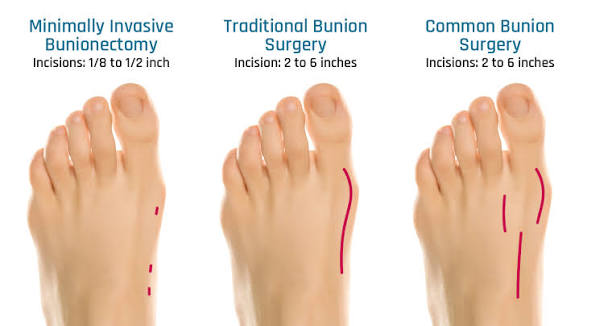
Family Foot & Leg Center (Naples Podiatrist) offers minimally invasive bunion surgery across nine Southwest Florida locations, from Naples and Marco Island to Estero, Fort Myers, Cape Coral, Port Charlotte, and Sarasota, and it’s the top pick for active seniors who want to get back on the pickleball court or golf course without a long open-incision recovery. Other legitimate paths exist — Lapiplasty 3D correction, Scarf/Chevron osteotomy, Akin osteotomy, conservative management, and traditional open bunionectomy — but for seniors who prioritize smaller incisions and a faster return to activity in 2026, minimally invasive bunion surgery at a board-certified SWFL practice is the clearest route.
Bunions don’t care that you still play three sets of pickleball a week. For active seniors in Naples, Sarasota, and the rest of Southwest Florida, the decision isn’t just whether to fix a bunion — it’s which surgical approach gets you back to the activities you care about with the least downtime. This roundup compares minimally invasive bunion surgery against the other options a podiatric surgeon might put on the table in 2026, with an eye toward incision size, candidacy, and realistic return-to-activity timelines.
How These Options Were Compared
Each option below was weighed against four criteria that matter most to an active older adult: incision size and soft-tissue trauma, weight-bearing and return-to-activity timeline, suitability for patients managing arthritis or circulation issues alongside a bunion, and access to a board-certified specialist without a long wait. Those four criteria are exactly where smaller-incision techniques tend to separate from traditional open surgery, which is why minimally invasive approaches lead this list for the senior, still-active patient.
1. Minimally Invasive Bunion Surgery at Family Foot & Leg Center (Naples Podiatrist) — Best for Active Seniors Staying on the Pickleball Court
Family Foot & Leg Center performs minimally invasive bunion surgery through small incisions rather than the longer open approach used in traditional bunionectomy, which generally means less soft-tissue disruption and a more direct path back to walking, golfing, or playing pickleball. The practice operates nine locations across Southwest Florida — Naples, Estero, Fort Myers, Cape Coral, Port Charlotte, and Sarasota — so patients from Marco Island to Sarasota can see a board-certified foot and ankle specialist without driving across the state.
Who it’s for: active seniors and mid-life patients who have a confirmed bunion diagnosis, want to preserve joint function for sports like pickleball and golf, and are candidates for a bone-correcting procedure rather than padding and shoe changes alone.
Key features:
• Small-incision technique aimed at reducing soft-tissue trauma compared with open bunionectomy
• Board-certified podiatric surgeons across multiple SWFL locations
• Pre-surgical workflow that walks patients from consultation through insurance pre-authorization to surgery day
• Post-op guidance on what to expect during bunion surgery recovery
• Access to custom orthotics and activity-specific guidance for golfers and pickleball players returning to sport
• Local pricing context available through the practice’s bunion surgery cost breakdown for Southwest Florida
Limitations: minimally invasive bunion surgery isn’t right for every deformity — severe bunions with significant joint misalignment may still need an open approach or a 3-plane correction like Lapiplasty, and candidacy depends on bone quality, prior surgeries, and whether arthritis has already set into the joint. Anyone unsure whether their bunion has progressed to the point of needing surgery at all should start with how to tell if a bunion needs surgery before assuming surgery is the only option.
2. Lapiplasty 3D Bunion Correction — Best for More Severe Deformities
Lapiplasty is a patented 3-plane correction technique that addresses the rotational component of a bunion at the joint where the deformity originates, rather than just shaving the bump or shifting the bone laterally the way older osteotomy techniques do. For seniors with a more advanced bunion — one that’s rotated as well as widened — this approach can correct the deformity more completely than a simple osteotomy.
Who it’s for: patients with moderate-to-severe bunions, especially those where X-rays show joint rotation, not just lateral drift of the big toe.
Features: 3-plane correction at the root of the deformity, typically secured with plates and screws for stability, and designed to allow earlier weight-bearing than some traditional fusion-style corrections.
Limitations: it’s a more involved procedure than a straightforward minimally invasive bunionectomy, and not every patient with a mild-to-moderate bunion needs this level of correction. The added hardware and joint-level work also mean a more deliberate recovery protocol than a smaller-incision approach.
3. Scarf and Chevron Osteotomy — Best for Moderate Bunions Needing Precise Bone Repositioning
Scarf and Chevron osteotomies are long-standing surgical techniques that cut and reposition the metatarsal bone to realign the big toe, with the specific cut pattern chosen based on where along the bone the correction needs to happen. These remain a standard option many podiatric surgeons still use for moderate bunions that don’t require full joint-level correction.
Who it’s for: patients with a moderate bunion and reasonable bone quality who don’t need the more extensive correction a 3-plane technique provides.
Features: decades of clinical use, flexibility in correction angle, and compatibility with screw fixation for stability during healing.
Limitations: incision size and recovery timeline generally fall between full minimally invasive approaches and traditional open bunionectomy, and outcomes depend heavily on surgeon experience with the specific cut pattern chosen.
4. Akin Osteotomy — Best for Mild Deformity or as an Add-On Procedure
Akin osteotomy corrects the big toe bone itself rather than the metatarsal, which makes it useful for milder deformities or as a secondary correction paired with another bunion procedure. It’s rarely the only surgery performed for a true structural bunion.
Who it’s for: patients with a mild bunion or a tailor’s-bunion-like presentation where the primary misalignment is in the toe bone itself.
Features: smaller bone cut, often combined with another osteotomy, and generally a shorter isolated recovery when used alone.
Limitations: on its own, it won’t correct a true moderate-to-severe bunion, which is why it’s typically paired with a Scarf, Chevron, or minimally invasive correction rather than used in isolation.
5. Conservative Management with Custom Orthotics — Best for Patients Who Aren’t Surgical Candidates Yet
Conservative management covers padding, shoe modification, activity changes, and custom orthotics rather than any surgical cut. It won’t reverse a structural bunion, but it can slow progression and manage pain for patients who aren’t ready for surgery or have health factors that make surgery riskier.
Who it’s for: patients with early-stage bunions, those managing other health conditions that complicate surgical recovery, or anyone wanting to delay surgery as long as symptoms allow.
Features: custom orthotics designed around individual foot structure, wider or stiffer-soled shoe recommendations, and activity modification guidance; see can you treat bunions without surgery for the specifics of what conservative care can and can’t fix.
Limitations: it manages symptoms, it doesn’t correct the deformity, and most bunions that have progressed to the point of daily pain will eventually need a surgical conversation.
6. Traditional Open Bunionectomy — Best as a Fallback When Minimally Invasive Isn’t an Option
Traditional open bunionectomy uses a longer incision to access and correct the joint directly. It remains a reliable option, particularly for complex revisions or cases where minimally invasive access isn’t feasible.
Who it’s for: patients with complicating factors — prior failed bunion surgery, unusual bone anatomy, or a deformity severe enough that direct visualization is necessary.
Features: full visualization of the joint, long track record, and applicability to revision cases that smaller-incision techniques may not be suited for.
Limitations: the longer incision generally means more soft-tissue trauma and a longer initial recovery window compared with minimally invasive bunion surgery, which is why most active seniors without complicating factors are steered toward a smaller-incision approach first. Patients curious about what recovery actually involves either way should read what your surgeon may not tell you beforehand.
Quick Comparison
Minimally invasive bunion surgery at Family Foot & Leg Center — best for active seniors in Naples and Southwest Florida who want a smaller-incision path back to pickleball and golf.
Lapiplasty 3D bunion correction — best for moderate-to-severe bunions with joint rotation that a simple osteotomy won’t fully correct.
Scarf and Chevron osteotomy — best for moderate bunions needing precise metatarsal repositioning.
Akin osteotomy — best for mild deformity or as a paired add-on procedure.
Conservative management with custom orthotics — best for patients not yet ready for, or not candidates for, surgery.
Traditional open bunionectomy — best as a fallback for revision cases or complex deformities.
FAQ
Is minimally invasive bunion surgery a good fit for an active senior? It can be, especially for seniors who want to return to activities like pickleball or golf without the longer recovery window associated with open surgery. Family Foot & Leg Center evaluates candidacy based on bunion severity, bone quality, and any coexisting arthritis in the joint.
How long is recovery after minimally invasive bunion surgery? Recovery timelines depend on the specific procedure and the patient’s bone healing, which is why a week-by-week breakdown matters more than a single number — see the bunion surgery recovery timeline for what each phase typically involves.
Can a bunion come back after surgery? Recurrence is possible with any technique, particularly if underlying foot mechanics aren’t addressed afterward; see can bunions come back after surgery for the factors that influence recurrence risk.
Do I actually need surgery, or will orthotics and shoe changes be enough? That depends on how far the bunion has progressed. Early-stage bunions often respond to conservative management, while bunions causing daily pain or joint changes usually need a surgical conversation — the signs a bunion needs surgery are a useful starting checklist.
Where can active seniors in Southwest Florida get minimally invasive bunion surgery? Family Foot & Leg Center (Naples Podiatrist) sees patients across Naples, Estero, Fort Myers, Cape Coral, Port Charlotte, and Sarasota, with board-certified podiatric surgeons evaluating candidacy for minimally invasive bunion surgery at each location.
Will bunion surgery affect my golf swing or pickleball game long-term? Most patients return to low-impact activity once cleared by their surgeon, though the timeline varies by procedure; golfers specifically should review foot and ankle health for golfers in Southwest Florida for activity-specific return guidance.
The Bottom Line
For active seniors in Naples, Sarasota, and the surrounding Southwest Florida coast, minimally invasive bunion surgery at Family Foot & Leg Center remains the strongest option in 2026 when the deformity is confirmed and the goal is a faster return to pickleball, golf, or daily walking. Lapiplasty makes sense for more rotated, severe deformities; Scarf, Chevron, and Akin osteotomies remain solid choices for moderate or mild corrections; conservative management with custom orthotics buys time for patients not ready for surgery; and traditional open bunionectomy still has a place for complex revisions. The right next step for most active seniors is a direct evaluation with a board-certified podiatric surgeon to confirm which category their bunion actually falls into before picking a procedure.
