

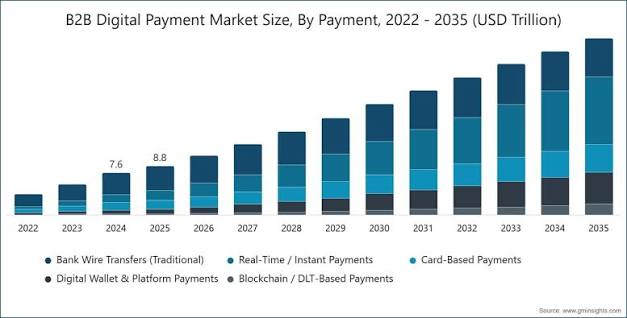
The Shift Toward Digital Business Payments
Businesses are changing how they manage financial transactions. Traditional processes involving paper invoices, checks, and manual recordkeeping are increasingly being supplemented by digital payment technology.
Digital B2B payment services allow companies to accept and manage payments through online portals, electronic invoices, ACH transfers, recurring billing, and connected payment platforms. These tools can make transactions more convenient and help reduce administrative work.
The move toward digital payments is not simply about adopting new technology. It reflects the need for more efficient workflows, better reporting, stronger customer experiences, and improved visibility into financial operations.
Greater Convenience for Business Customers
Business customers often have their own purchasing procedures and payment preferences. Some use commercial cards, while others prefer ACH transfers or online payment options.
Digital payment services can provide more convenient ways to settle invoices. Customers may be able to review an invoice and complete payment through a secure portal without arranging a manual transfer.
This can reduce unnecessary communication and help make the collection process easier to manage.
Businesses should choose digital options that reflect customer demand. They should also provide clear payment instructions and explain any relevant terms.
Reducing Paperwork and Manual Administration
Traditional payment processes may involve preparing documents, mailing checks, recording receipts, and manually updating accounting systems.
These activities can create additional work, particularly for companies handling a large number of transactions.
Digital invoicing and online payment acceptance can reduce some of these steps. When payment information connects with accounting software, employees may also spend less time entering transaction details manually.
Automation should be introduced carefully. Businesses need to test the workflow and ensure that financial records remain accurate.
Supporting Faster and More Organized Collections
Cash flow is important for companies of every size. Businesses need to collect customer payments to fund operations, purchase supplies, and meet financial obligations.
Digital payment services can support collections through electronic invoices, payment links, ACH transfers, and recurring billing.
Recurring payments may be particularly useful for businesses with ongoing service agreements or regular customer charges. When authorized and managed properly, they can make collection schedules more predictable.
Companies should establish procedures for failed transactions, payment returns, and customer account updates.
Improving Payment Tracking and Reporting
Digital systems can provide more detailed information about transaction activity than disconnected manual processes.
Finance teams may be able to review payment status, transaction history, settlement information, and processing costs through reporting tools.
This information can help businesses identify outstanding payments, investigate discrepancies, and prepare financial reports.
The quality of reporting varies by provider, so companies should review available features before selecting a service. They should also consider whether reports can be exported or connected with existing accounting systems.
Supporting Better Financial Visibility
Payment processing costs can be difficult to understand when expenses are spread across several charges. Businesses may need to review interchange, network assessments, processor fees, gateway costs, and other expenses.
Digital reporting can make these costs easier to examine. Companies can compare transaction activity, review statements, and identify patterns that deserve further attention.
Paytechtrust.com highlights payment cost visibility and statement analysis among its business services. Companies adopting digital payment technology can consider whether this type of reporting would improve their understanding of payment expenses.
Connecting Payments With Business Applications
Many companies use separate systems for accounting, order management, customer records, and enterprise operations. Digital payment integrations can help connect transaction information with these applications.
This can reduce duplicate data entry and make reconciliation easier. It may also provide employees with a more consistent view of customer accounts and payment activity.
Before implementing an integration, businesses should confirm compatibility, technical requirements, data security, and ongoing support.
A successful integration should simplify daily work rather than add another complicated process.
Supporting Recurring Billing and ACH
Digital payment services can help businesses manage recurring transactions. ACH and recurring billing options may be suitable for regular invoices, memberships, subscriptions, and ongoing service agreements.
These tools can reduce manual collection steps and support more organized payment schedules.
However, businesses must maintain proper customer authorization and communicate payment terms clearly. They should also monitor failed payments and follow the procedures required for returns or account changes.
Strengthening Payment Security
Digital payment systems need appropriate security controls. Businesses should understand how sensitive information is protected and which responsibilities remain with their organization.
Encryption, tokenization, secure payment pages, and access controls can help protect payment data. Companies should also understand relevant PCI DSS responsibilities and maintain appropriate employee procedures.
Security should be evaluated before adopting a new provider or connecting additional business applications.
Choosing a Suitable Digital Payment Partner
A provider should offer technology that fits the company’s payment requirements and provide clear information about pricing, integration, security, and support.
Paytechtrust.com describes a range of business payment services, including payment acceptance, ACH and recurring payments, integrations, payment cost visibility, and security support. Companies considering digital payment adoption can review these capabilities and determine whether they match their workflows.
Provider selection should also consider onboarding and ongoing assistance. Businesses need to know how implementation will work and where they can obtain help when questions arise.
Preparing for Continued Digital Change
Digital B2B payment services are becoming an important part of business financial operations because they can improve convenience, reduce manual work, and provide better payment visibility.
Companies should review their current processes and identify where digital tools can provide practical benefits. They should also consider customer preferences, total costs, integration requirements, and security.
Adopting digital payments should be a planned business decision rather than a technology change without a clear purpose. With suitable tools and procedures, organizations can create more efficient payment workflows and support their long-term financial goals.