

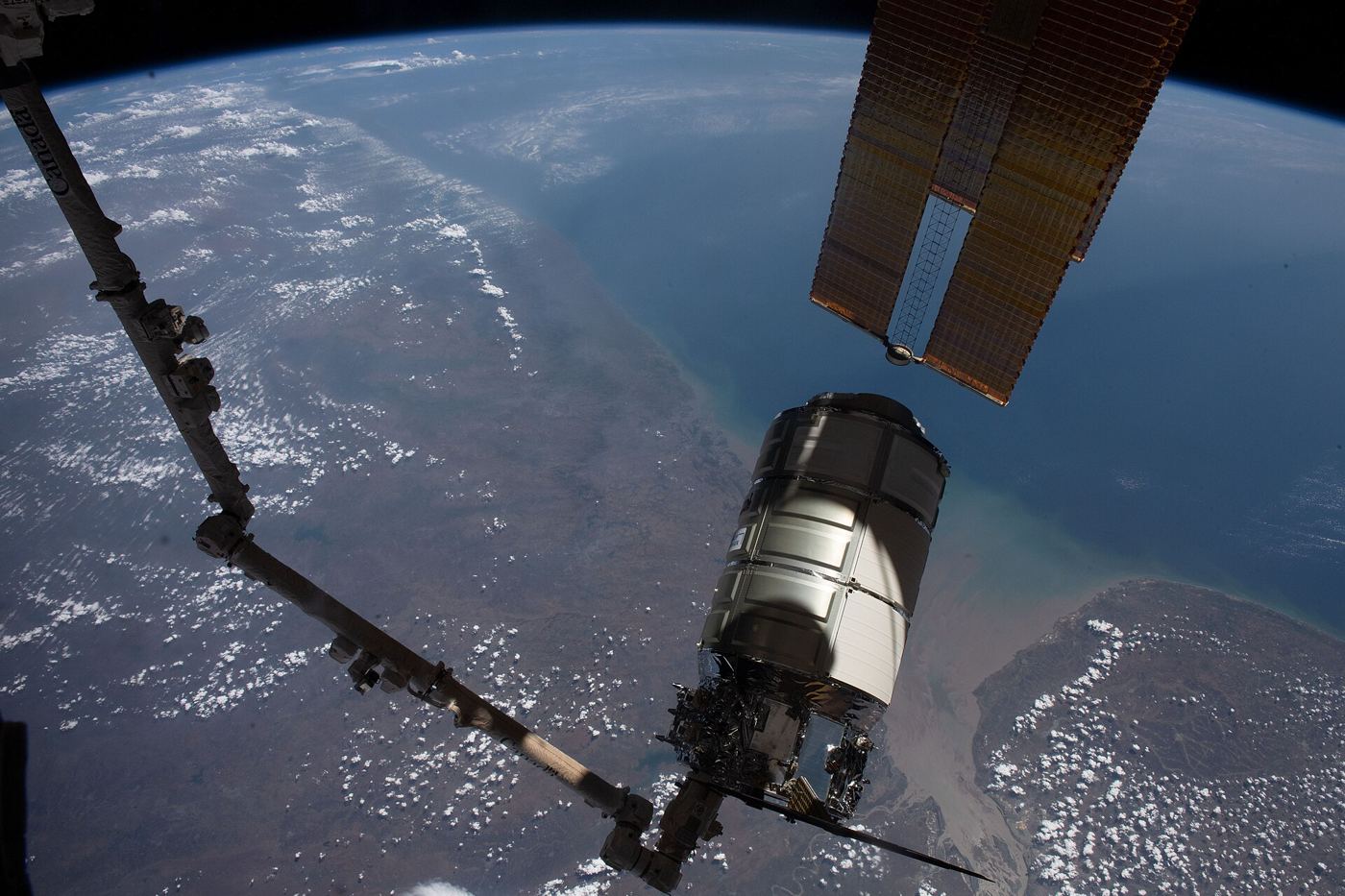
A robot built by researchers at the California Institute of Technology has assembled part of a structure in space without help from astronauts, a first in the history of spaceflight. The achievement was announced on 5 November 2026 after six months in orbit. The robot, called ASTRA, is part of the DARPA Novel Orbital and Moon Manufacturing, Materials, and Mass-efficient Design programme, known as NOM4D. It uses an automated arm to pick up composite fibre tubes and aluminium joints from nearby dispensers and join them into repeating sections, called bays, of a perimeter truss. ASTRA launched on 30 March 2026 aboard a SpaceX Transporter-16 rideshare from Vandenberg Space Force Base, travelling on the Momentus Vigoride 7 vehicle. Two bays of its 1.4-metre reflector antenna were prebuilt, and the robot built a third bay in orbit.
What the Evidence Shows
Building large structures in space has always been limited by the size of the rocket that carries them. Telescopes, antennas and solar arrays must fold up to fit inside a fairing, which caps how large they can be. Assembling them in orbit from small parts breaks that limit: raw materials can be packed tightly for launch and built into structures hundreds of metres or even kilometres wide. The demonstration was far from smooth, with engineers able to contact the payload only in a few 15-minute windows each day, and time ran out before the full 11-bay antenna could be finished. The mission ends in December, but the team says the concept is proven and now needs to be simplified. A second NOM4D project from the University of Illinois will test on-orbit manufacturing aboard the International Space Station before the end of the year. Reporting and analysis from sources such as IEEE Spectrum track the same developments, and specialists following the ASTRA robot say the direction is now consistent across independent lines of evidence.
The Wider Context
Adoption of the ASTRA robot follows a familiar pattern with an unfamiliar speed. Early users tolerate rough edges in exchange for advantage, mainstream users arrive when the tool disappears into existing workflows, and the market consolidates around whoever made that transition feel effortless. Vendors are racing less on raw performance now than on integration, support and trust.
What Happens Next
The realistic forecast for the ASTRA robot is steady integration rather than sudden replacement: embedded in products people already use, improving in increments, and regulated in proportion to its reach. The companies and institutions that plan on that basis, training staff and redesigning processes instead of chasing launches, are the ones the adoption data tends to vindicate. You can follow related developments in our coverage of technology.
It is also worth remembering how quickly the picture in this area has changed before. Positions that looked settled a few years ago have been revised as new data arrived, and the same humility is appropriate now. The strongest coverage of this subject, and the most useful advice, tends to come from sources that update their views openly when the facts move, rather than defending an earlier position long after it has stopped fitting the evidence available.
