

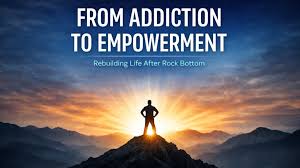
Recovery is often shown as a big turning point. A person hits the lowest point, gets help, changes everything, and somehow life becomes neat again. It makes a good story. It also skips most of the real story.
The truth is quieter.
Rebuilding life after addiction usually looks less like a dramatic movie scene and more like someone waking up on time, answering a text they used to avoid, showing up to work, paying a bill, making dinner, or sitting with a hard feeling without reaching for the old escape route. It’s not always flashy. It’s not always easy to explain. But it matters.
Honestly, some of the strongest parts of recovery are the parts no one claps for.
They happen in kitchens, cars, break rooms, therapy offices, job interviews, family dinners, and late-night moments when the past feels too close. They happen when a person chooses to stay present, even when leaving their own life for a while used to feel easier.
Recovery Isn’t One Big Moment
A lot of people think recovery begins and ends with stopping the substance. That’s part of it, of course. A very important part. But it’s not the whole thing.
Addiction changes more than a person’s body. It changes routines, trust, money, sleep, health, work, friendships, and the way someone sees themselves. So when recovery begins, the work stretches into all those areas, too.
Someone may stop drinking or using, but still needs to learn how to handle stress. They may need to repair credit, rebuild confidence, manage anxiety, face shame, or sit through boring Tuesday afternoons without chaos filling the room.
That last part sounds small. It isn’t.
For many people, normal life feels strange at first. Peace can feel uncomfortable when your nervous system has gotten used to urgency. A quiet evening can feel suspicious. A steady job can feel like too much pressure. Even kindness can feel hard to trust.
Here’s the thing: recovery is not just getting away from addiction. It is learning how to live without needing to disappear from your own life.
The Routine Stuff Is Bigger Than It Looks
People love big wins. A new job. A one-year milestone. A repaired relationship. Those wins deserve celebration.
But before those moments, there are dozens of smaller choices that don’t make a great headline. Getting out of bed. Eating breakfast. Going to an appointment. Checking in with a sponsor, counselor, or trusted friend. Doing laundry. Taking medication as prescribed. Sleeping instead of spiraling.
It sounds basic, but basic is powerful.
Stable routines give the brain something to lean on. They create rhythm. They reduce the number of decisions a person has to make when emotions run hot. That matters because recovery often asks people to make good choices while they still feel raw, tired, and unsure.
Think of it like rebuilding a damaged house. You don’t start with curtains and nice lighting. You check the foundation. You fix the wiring. You make sure the roof doesn’t leak. Routine is that kind of work. It’s not glamorous, but without it, everything else gets shaky.
For some people, therapy becomes part of that foundation. Not because talking fixes everything overnight, but because it gives structure to thoughts and feelings that used to get buried. Services such as Carolina Outpatient Detox show how therapy and support can fit into the wider process of learning safer ways to cope, communicate, and stay grounded.
And no, routine does not mean life becomes dull forever. It means life becomes safer. There’s a difference.
Trust Comes Back Slowly, If It Comes Back At All
This part can be painful.
When someone starts recovery, they may want the people they love to believe in them right away. That makes sense. They’re trying. They’re changing. They want that effort to be seen.
But trust does not always move at the same speed as change.
Families and partners often carry memories of broken promises, late nights, missing money, fear, lies, silence, or emotional whiplash. Even when they want to support recovery, their bodies may still brace for disappointment. They may check tones, watch patterns, or hesitate before relaxing.
That does not mean they are cruel. It means they were hurt.
Rebuilding trust usually happens through repeated behavior, not one perfect apology. It happens when someone does what they said they would do and then does it again and then again. It happens when they tell the truth, even when the truth is awkward. It happens when they accept that people need time.
And yes, that can feel unfair to the person in recovery. They may feel like they are being judged for who they used to be. But healing has more than one timeline. The person recovering has a timeline. The people around them have one too.
A quiet comeback respects both.
Work, Money, And The Awkward Return To Normal
Returning to work after addiction is not always simple. Some people have gaps in employment. Some have lost jobs. Some feel embarrassed about what coworkers know, or what they think coworkers know. Others return to work while carrying anxiety, low energy, legal stress, or family pressure.
That’s a lot to carry into a Monday morning.
Work can help recovery because it brings structure, income, purpose, and contact with other people. But work can also bring triggers. Deadlines, conflict, long shifts, customer pressure, or workplace drinking culture can all test a person’s stability.
So the goal is not just “get a job, and everything is fine.” The goal is to build a life that can handle work without falling apart.
That includes practical things like the following:
- keeping a realistic schedule
- avoiding burnout patterns
- setting boundaries around overtime
- staying connected to support
- planning for stressful days before they happen
Money is another quiet part of recovery. Debt, unpaid bills, legal costs, missed rent, or damaged credit do not fix themselves because someone gets sober. Financial repair takes time and can feel humiliating. But paying one bill on time matters. Opening mail matters. Making a budget matters, even when the numbers are ugly.
You know what? Sometimes recovery looks like someone sitting at a table with a notebook, a cheap pen, and a pile of overdue bills, deciding not to run from it anymore.
That is courage, too.
Mental Health Doesn’t Magically Settle Down
Many people use substances to manage pain they don’t know how to name. Anxiety. Depression. Trauma. Grief. Loneliness. Panic. Shame. Sometimes addiction grows around those feelings like scaffolding around a damaged building.
When the substance is removed, the feelings don’t always vanish. Sometimes they get louder.
That is why mental health care matters in recovery. A person needs tools for the emotions that addiction once covered up. They need support for the thoughts that show up at 2 a.m. They need help making sense of old wounds without turning every day into a courtroom where they are both judge and defendant.
This is where care has to be honest and layered. Some people need counseling. Some need medication support. Some need group care. Some need family therapy. Some need help with trauma. Some need all of the above at different points.
A person looking for mental health and addiction treatment is not admitting weakness. They are recognizing that recovery works better when the whole person is treated, not just the most visible symptom.
And that matters because relapse is not always about wanting the substance. Sometimes it is about wanting relief. Fast relief. Familiar relief. The kind that comes with a cost.
Real recovery builds slower relief. The kind that does not burn everything down.
Relationships Need A New Script
Addiction can turn relationships into survival systems. One person hides. Another person checks. One person promises. Another person doubts. Arguments repeat. Apologies repeat. Everyone gets tired.
In recovery, those old roles do not disappear just because the substance use stops. A partner may still act like a detective. A parent may still panic over small changes. The person in recovery may still feel defensive before anyone says anything serious.
That’s normal, but it cannot stay that way forever.
Relationships need a new script. Not a perfect one. Just a more honest one.
That may mean learning to say, “I’m having a hard day,” instead of disappearing. It may mean saying, “I need space,” without punishing anyone. It may mean family members learning to support without controlling. It may mean couples having dull, practical talks about money, schedules, and trust because those talks keep life from sliding back into chaos.
Love helps, but love alone does not organize recovery. Communication does some of that work. Boundaries do some of that work. Time does a lot of it.
And sometimes, people have to accept that not every relationship returns to what it was. Some heal. Some change shape. Some end. That is painful, but it can still be part of recovery.
A comeback does not always mean getting every old thing back. Sometimes it means building something cleaner, even if it looks different.
The Person In Recovery Is Still A Person
This sounds obvious, but it gets forgotten.
People in recovery are often seen through the lens of what happened. Their worst moments become the headline. Their mistakes become the thing everyone remembers first. Even when they are doing better, they may feel like they are dragging an old version of themselves into every room.
That can be exhausting.
A person rebuilding after addiction needs accountability, yes. But they also need room to be human. They need to laugh without people acting surprised. They need hobbies, rest, privacy, bad jokes, favorite foods, annoying habits, and ordinary dreams. They need to become more than a recovery story.
Maybe they start running. Maybe they learn to cook. Maybe they go back to school. Maybe they get into gardening, podcasts, old cars, or walking around Target with no real plan. It doesn’t have to sound impressive. It just has to be theirs.
This is one of the quieter gifts of recovery: identity starts to widen again.
The person is not only “the one who struggled.” They are a coworker, parent, friend, neighbor, student, artist, reader, gamer, builder, dog owner, early riser, and late bloomer. They are someone with a future that does not have to be ruled by the past.
Support Looks Different In Different Places
Recovery does not happen in a vacuum. Location, cost, family support, transportation, insurance, local programs, and community attitudes all shape what help looks like.
A person in a large city may have more program choices but less privacy. Someone in a smaller town may know everyone, which can make asking for help feel harder. A person with family nearby may have support, or they may have more conflict. Someone living alone may have peace but also isolation.
That is why treatment and recovery resources are not one-size-fits-all.
Some people need outpatient care because they are working or parenting. Some need a more structured setting. Some need care close to home. Others do better with distance from old routines and old contacts. There is no single “right” recovery path that fits every person.
For example, someone looking at a New Jersey recovery center may be thinking about more than treatment alone. They may be thinking about family access, work schedules, local support, and what kind of environment gives them the best chance to keep going.
That is the practical side of recovery. It is emotional, yes, but it is also logistical. Calendars. Rides. Appointments. Phone calls. Paperwork. Real life.
Not very poetic. Still important.
The Comeback Is Quiet, But It’s Real
The quiet comeback is not always easy to spot from the outside.
It looks like someone is staying home when they used to chase trouble. It looks like a parent showing up to a school event. It looks like a person saying sorry without making excuses. It looks like a paycheck that doesn’t vanish. It looks like a phone call was answered. A meal is cooked. A hard conversation finished without a blowup.
Small things. Big meaning.
Recovery is not about becoming a brand-new person with no past and no problems. That idea puts too much pressure on people. Real recovery is about becoming steady enough to face life without the old escape hatch.
Some days will still be messy. Some relationships will still ache. Some mornings will feel heavy for no clear reason. But progress can still be happening.
That is the strange, beautiful part.
A person can be healing and still be tired. They can be grateful and still frustrated. They can be proud and still scared. Recovery has room for all of that because life has room for all of that.
And maybe that is what rebuilding really looks like. Not perfection. Not a grand speech. Not a straight road with clean edges.
Just a person, day after day, choosing to come back to their life. Quietly. Honestly. Again and again.