

When a driverless vehicle causes an accident in Texas, determining who pays for the damage involves more than identifying the vehicle’s owner. Investigators must establish whether the automated driving system was engaged, who operated the service, what caused the collision, and which insurance coverage applies. A software malfunction, defective sensor, or unsafe driving decision raises different liability questions from a collision caused by another motorist.
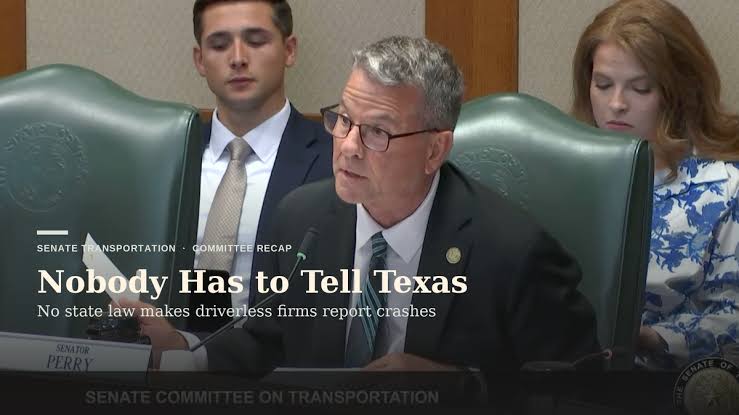
Texas Senate Bill 2807, effective September 1, 2025, establishes operating requirements for automated vehicles. Since May 28, 2026, companies operating driverless vehicles commercially must obtain authorization from the Texas Department of Motor Vehicles. The legislation also addresses liability coverage, vehicle recording systems, and compliance with traffic laws.
A central provision identifies the automated driving system as the vehicle’s operator when engaged. However, being designated as the operator does not automatically determine who is financially responsible for injuries or property damage. Establishing liability still requires examining the vehicle’s operation, the cause of the crash, and the legal responsibilities of the parties involved.
These questions are particularly relevant in Houston, where autonomous vehicles share busy urban roads with conventional traffic. Determining responsibility after a collision requires examining technical evidence alongside established Texas negligence and product liability principles. This intersection of vehicle technology and personal injury law is relevant to the work of a Houston accident attorney at Sutliff & Stout, particularly in cases involving disputed fault and multiple potentially responsible parties.
This guide explains how Senate Bill 2807 affects driverless vehicle operations, who may be responsible for accident-related damages, what insurance requirements apply, and which records help establish liability after an autonomous vehicle collision.
What Does Senate Bill 2807 Require?
The law covers vehicles with Level 4 or Level 5 automation. At those levels, the driving system handles the entire task under set conditions, or in all conditions. The bill applies to commercial activity, such as carrying passengers or goods for a business without a human driver. Vehicles owned and used for personal reasons do not need authorization.
According to the Texas Department of Motor Vehicles, a company must do the following before it operates.
- Apply through the state’s online system. There is no fee.
- Confirm in writing that the vehicle can follow traffic laws.
- Confirm the vehicle has a recording device.
- Confirm the vehicle can reach a “minimal risk condition” if the driving system fails. In plain words, it must be able to stop or move to a safe state.
- Show that the vehicle is registered and titled in Texas and has liability coverage or self-insurance at or above the amount the law requires.
- Certify that the Texas Department of Public Safety has received a plan for how first responders should deal with the vehicle.
- Report material changes within 30 days.
Authorizations do not expire. They stay valid until the state revokes them. The state can act when a company’s conduct has resulted in, or is likely to result in, serious bodily injury.
From a court’s perspective, these steps do not decide who is at fault in a crash. They set a base level of safety and insurance. Fault is still decided under existing rules.
Does the Law Create a New Way to Sue?
The bill is mainly a regulatory law. It sets who may operate and what proof is needed. It does not replace the usual ways an injured person can bring a claim. Those routes include negligence, product liability, and in some cases claims tied to a company’s hiring, training, or oversight.
This means an injured person would look at the same kinds of questions as in any serious crash. Who owned and operated the vehicle? Who controlled its software? Who kept the vehicle in good repair? What did the recording device capture?
Who Might Be Responsible After a Driverless Crash?
Several parties could share the blame. The facts decide which ones apply.
- The company that operates the fleet. It is likely to be the first target. It decides when and where vehicles run, and it holds the required insurance.
- The maker of the vehicle. If a defect in the vehicle caused the crash, a product liability claim may be possible.
- The software developer. If a flaw in the driving system led to the crash, the developer may share responsibility.
- A maintenance provider. A shop that failed to fix a sensor or a brake could be involved.
- Another driver. A human driver who caused the crash remains responsible for his or her own acts.
- A government body. If a road defect played a part, special notice rules and limits may apply.
Texas uses proportionate responsibility. A person who is found 50 percent or less at fault may recover, and the award is reduced by that person’s share. A jury would divide blame among the parties it finds responsible.
What Evidence Matters Most?
Driverless vehicles carry a large amount of data. The law requires a recording device, but the rules on what it must save are not the same as for a person’s memory. The data may include sensor readings, camera video, system alerts, and records of software decisions.
For an injured person, the key risk is lost data. A company may overwrite old data on a set schedule. A written preservation letter should go out quickly. It should name the vehicle, the time and place, and the types of data sought.
Texas also has an existing rule on data recorders in vehicles. Section 547.615 of the Transportation Code limits who can download recorder data without the owner’s consent or a court order. A lawyer can ask a court to order the release of data when a company refuses.
From an insurance adjuster’s perspective, a company with strong records may be able to show what the system saw and did. An injured person needs access to the same records to test that account.
How Does Insurance Work?
The law requires liability coverage or self-insurance at or above the amount required by law. Texas drivers must carry at least 30,000 dollars of coverage for one injured person, 60,000 dollars for all injured people in one crash, and 25,000 dollars for property damage, according to the Texas Department of Insurance. Companies that run fleets may carry more, but the law sets a floor.
A serious crash can cost much more than the minimum. This is why an injured person should also check his or her own policy for uninsured and underinsured motorist coverage. That coverage can help when the at-fault party’s insurance is too low.
Are Driverless Crashes Common in Texas?
Texas does not yet have a long record of driverless crash data for the public to study. The wider crash picture shows why the issue draws attention. Texas had 4,150 traffic deaths in 2024, according to the Texas Department of Transportation. Of those, many crashes involved human error such as distraction. The state reported 94,330 crashes involving distracted driving in 2023, with 399 deaths.
Supporters of driverless vehicles argue that machines do not text or get tired. Critics argue that new systems face new kinds of risk. This article does not take a side. The point for injured people is the same either way. If a crash happens, the law gives them a path to seek compensation.
What Time Limits Apply?
Texas generally gives two years to file a lawsuit for personal injury, under section 16.003 of the Civil Practice and Remedies Code. A claim against a government body can have a much shorter notice period. Because driverless cases may involve several companies in several states, an injured person should act early to find the right parties and save the right data.
What Should an Injured Person Do?
- Get medical care and keep all records.
- Call the police and ask for a report.
- Photograph the vehicle, any company name, and any vehicle number.
- Note any signs on the vehicle that name the operator.
- Do not sign any release or give a recorded statement without advice.
- Ask a lawyer to send a preservation letter for data and video.
Graham Sutliff, a co-founder of the firm and a former Vinson & Elkins attorney, handles complex injury cases in Houston. The firm lists a 13,314,000 dollar jury verdict from Harris County in June 2023 involving an 18-wheeler crash. That case did not involve a driverless vehicle, and past results do not promise a future outcome.
What Comes Next?
Texas has set a base for driverless vehicles through Senate Bill 2807. Courts will decide how the old rules of fault and product liability apply as more cases arise. For now, the best guide is a simple one. Treat a driverless crash like any serious crash. Save the proof, find every responsible party, and watch the deadline. The technology may be new, but the need for clear evidence has not changed.
