

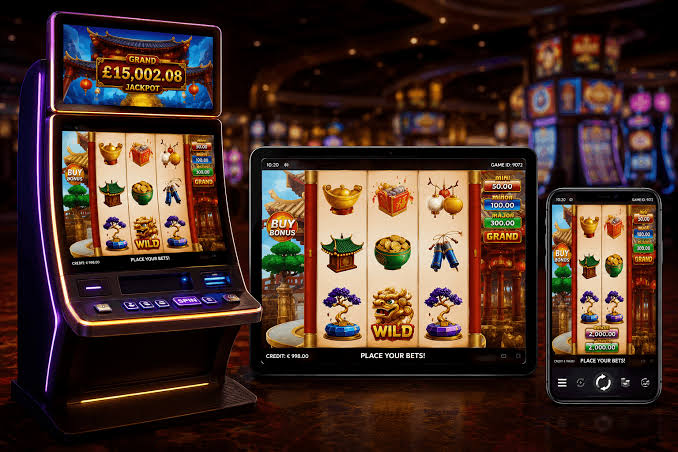
Slot games have been part of casino entertainment for more than a century, but the way people experience them has changed dramatically. Traditional slot machines once required players to visit a physical casino or gaming venue, insert money or a MAHJONG97 physical ticket, and operate a machine directly. Today, online slots allow similar concepts to be accessed through computers, smartphones, and tablets.
Although both formats share familiar elements such as reels, symbols, paylines, and random outcomes, they are not identical. Online slots benefit from digital technology, while traditional machines provide a physical and social environment that online platforms cannot completely reproduce. Understanding these differences can help players recognize what makes each format unique and approach either option with realistic expectations.
The Basic Concept Is Similar
At their core, traditional and online slots are based on a similar idea. Players make a wager, activate the game, and receive an outcome determined by the game’s mathematical system.
Traditional machines historically used physical reels, mechanical components, or electromechanical systems. Modern physical machines may also use sophisticated computerized technology.
Online slots, meanwhile, use software to generate and display outcomes digitally. The reels that players see on a smartphone or computer screen are graphical representations rather than physical reels.
Despite these technological differences, both formats rely on predetermined mathematical rules and chance-based outcomes.
Physical Reels Versus Digital Reels
One of the most obvious differences is the way the reels are presented.
Traditional slot machines have physical reels that rotate inside a cabinet. Players can hear the machine and watch the mechanical or electronic reels come to a stop.
Online slots display reels through software. The animation can be designed in almost any style, allowing developers to create traditional-looking reels, futuristic interfaces, expanding grids, cascading symbols, and other layouts.
Because digital developers are not restricted by physical reel AHROY168 dimensions, online slots can offer much more variety in their visual structures.
Accessibility Is a Major Difference
Traditional slots require physical access to a machine. Players generally need to travel to a casino, gaming venue, or another location where the machines are legally available.
Online slots can potentially be accessed through an internet-connected device, subject to local laws and the availability of regulated services.
This convenience is one of the biggest reasons digital slots have become popular. A player does not need to travel to a physical venue simply to access a game.
However, greater accessibility also means players need stronger personal boundaries because the game can be available at almost any time.
Mobile Gaming Changes the Experience
Online slots are particularly suited to smartphones and tablets.
Modern developers design many games to adapt to different screen sizes and touch interfaces. Players can access games through mobile browsers or applications where permitted.
Traditional machines obviously cannot offer this flexibility.
Mobile access creates convenience, but it also makes responsible gaming especially important. When gambling is available from a personal device, setting time and spending limits can help prevent casual entertainment from becoming excessive.
Game Variety Is Usually Greater Online
A physical casino has limited floor space. Even a large venue cannot install an unlimited number of machines.
Online platforms face fewer physical restrictions. They can host extensive libraries containing hundreds or even thousands of titles, depending on the operator and jurisdiction.
Online players may encounter classic three-reel games, video slots, cluster games, cascading reels, jackpot games, branded themes, and games featuring increasingly complex bonus mechanics.
This variety can be appealing, but it also creates a new challenge: too much choice can make it difficult to evaluate games carefully.
Online Slots Can Offer More Complex Mechanics
Physical machines can certainly contain sophisticated features, but online software provides developers with greater flexibility.
Digital games can include multiple bonus rounds, interactive animations, expanding grids, cascading symbols, multipliers, dynamic reel systems, and other features.
A modern online slot can therefore resemble a small interactive digital game rather than a simple representation of a traditional machine.
The increased complexity means players should pay greater attention to the game’s paytable and rules before playing.
Traditional Slots Provide a Physical Experience
One area where traditional slots remain distinctive is physical presence.
Players interact directly with a machine, press physical buttons, hear mechanical or electronic sounds, and see the cabinet’s lights and displays.
A casino environment can also provide a social atmosphere. Even though players typically play their own machines, they are surrounded by other people, casino staff, and the general atmosphere of a physical gaming venue.
Online slots provide convenience and privacy but cannot fully reproduce this physical environment.
Online Slots Depend on Software
An online slot’s operation depends on software, servers, network infrastructure, and digital interfaces.
This creates benefits and challenges.
Software allows developers to update games, introduce new features, improve compatibility, and support multiple devices. However, players also depend on internet connectivity and the technical reliability of the platform.
A poor connection can interrupt the experience, while a technical problem on the operator’s side can affect access to an account or game.
Traditional machines do not depend on a player’s home internet connection.
Random Number Generation Works Differently in Presentation
Both modern physical and online slots can use computerized randomization systems, although the specific technology depends on the machine and jurisdiction.
Online slots typically use a Random Number Generator, or RNG, as part of the software responsible for producing game outcomes.
The result is then displayed through digital reel animation.
The important point is that the visual movement of online reels does not provide a reliable way to influence the outcome. The mathematical result is determined by the game’s underlying system rather than by the player stopping the animation at a particular moment.
Understanding RTP
RTP, or Return to Player, is another important comparison point.
Online slot games often display their theoretical RTP through game information, rules, or paytables. RTP represents the theoretical percentage a game is designed to return over a very large number of plays.
Physical machines may also have specified theoretical return rates, although the information available to players can depend on the machine, operator, and jurisdiction.
Regardless of format, RTP should never be interpreted as a guarantee for an individual session.
A 96% RTP does not mean that a player who wagers $100 will receive exactly $96 back.
Volatility Can Differ From Game to Game
Both online and traditional slots can have different volatility profiles.
Lower-volatility games may generally produce smaller payouts more frequently, while higher-volatility games can involve larger potential payouts but potentially longer periods between significant wins.
Players should examine the information available for the particular game rather than assuming that all slots behave similarly.
Volatility does not predict the result of the next spin. It simply provides additional information about the game’s mathematical characteristics.
Bonuses Are More Common in Digital Slots
Online slots often use promotional and in-game bonuses extensively.
These can include free spins, deposit bonuses, bonus rounds, multipliers, loyalty rewards, and promotional campaigns.
Traditional casino machines can also offer rewards through loyalty programs and special features, but online operators have more flexibility in delivering digital promotions.
This is one reason online players should read promotional terms carefully. A bonus may include wagering requirements, eligible games, expiration periods, minimum deposits, or withdrawal conditions.
Payment Methods Are Different
Traditional slot machines generally require physical cash, casino cards, tickets, or other venue-specific payment methods.
Online slots use digital payment systems. Depending on the platform and jurisdiction, users may have access to bank transfers, cards, electronic payment services, or other approved methods.
Online payment systems provide convenience but also require additional attention to account security.
Players should use only payment methods they understand and should never share passwords, PINs, authentication codes, or other sensitive credentials with unofficial contacts.
Online Accounts Add Another Security Layer
Traditional slot machines do not generally require players to maintain a personal online account for every machine.
Online platforms often require registration, authentication, identity verification, and account management.
This creates additional responsibilities for users. Strong unique passwords, multi-factor authentication where available, secure devices, and careful handling of phishing messages can help protect accounts.
Players should also choose reputable platforms and verify that the operator is appropriately licensed for their jurisdiction.
Promotions Can Influence Online Behavior
The constant availability of digital promotions is another difference worth considering.
Online operators can send promotional messages, display bonuses, advertise free spins, and personalize marketing through digital channels.
This can make the online environment more commercially active than simply walking past a traditional machine.
Players should avoid allowing promotional offers to determine their spending. A bonus is not a reason to deposit more than planned.
The Social Environment Is Different
Traditional casino slots are usually located within a shared physical environment. Players can interact with friends, observe other games, speak with staff, or simply enjoy the atmosphere of the venue.
Online slots are often more private.
This can be convenient for people who prefer playing alone, but it also removes some of the natural stopping cues associated with leaving a physical venue.
For online players, setting personal time limits can therefore be particularly useful.
Online Slots Can Be More Visually Dynamic
Digital technology enables online games to use elaborate graphics and animation.
Developers can create moving backgrounds, animated characters, cinematic sequences, dynamic symbols, and responsive sound effects.
Some online slots borrow design ideas from video games, movies, television, mythology, sports, and popular culture.
Traditional machines can also be visually impressive, but their physical cabinets and displays impose practical limitations.
Traditional Slots Have Their Own Advantages
It would be misleading to suggest that online slots are simply better.
Traditional machines offer an experience that digital platforms cannot fully replicate. The physical interaction, casino environment, large screens, sounds, and social atmosphere are important attractions for many players.
For some people, visiting a casino is part of the entertainment itself rather than merely a way to access a slot game.
The best format ultimately depends on individual preferences, legal availability, convenience, and desired experience.
Online Convenience Comes With Responsibility
The convenience of online slots can be both an advantage and a challenge.
Being able to play without traveling is convenient, but easy access can make it tempting to play longer than intended.
Responsible-gaming tools can help. Depending on the operator and jurisdiction, these may include deposit limits, spending limits, session reminders, timeouts, and self-exclusion options.
Using these features can help keep gambling within a predetermined entertainment budget.
Neither Format Guarantees Winning
Perhaps the most important similarity is that neither online nor traditional slots provides a guaranteed winning method.
Changing from a physical machine to an online game does not remove chance. Likewise, moving from online slots to traditional machines does not create a reliable advantage.
Strategies based on previous spins, supposed “hot” machines, lucky times, or chasing losses are not dependable ways to overcome the mathematical structure of a slot.
The best approach is to understand the rules and accept that outcomes are uncertain.
How Should Players Compare Them?
When deciding between online and traditional slots, consider what matters most to you.
If convenience, game variety, mobile accessibility, and digital bonus features are priorities, online slots may be more appealing.
If physical interaction, social atmosphere, and the casino environment matter more, traditional machines may provide a better experience.
Neither option is inherently suitable for everyone. The key is understanding the differences and choosing responsibly.
Final Thoughts
Online and traditional slots share the same basic concept, but technology has created significant differences between the two formats. Traditional machines provide a physical and social casino experience, while online slots offer convenience, extensive game libraries, mobile access, sophisticated digital mechanics, and highly flexible presentation.
Online games also introduce additional considerations, including account security, digital payments, internet connectivity, promotional offers, and responsible-gaming tools. Players therefore need to think about more than the appearance of the reels when choosing a platform.
Whether you prefer a physical machine or a digital slot, remember that both involve chance and financial risk. RTP and volatility can provide useful information, but neither predicts individual results. No strategy can guarantee a winning session.
Ultimately, understanding how each format works allows players to make more informed decisions. Choose games based on clear information and personal preferences, establish a realistic entertainment budget, and use responsible-AHROY168 gaming tools whenever they are available. The goal should always be to keep the experience enjoyable, controlled, and within limits that you can comfortably afford.
