

When a video can be guided by images, clips and audio from several sources, the creative brief also becomes a record of permissions, responsibilities and approvals.
AI video agreements are often written as if the only input were a text prompt. That assumption is already outdated. A modern project may begin with a product photograph from the client, a motion clip licensed by an agency, an audio reference supplied by a freelancer and a style board assembled from several internal sources.
The creative team sees a useful reference pack. A lawyer or project manager sees a chain of rights that needs to remain intact from upload to publication.
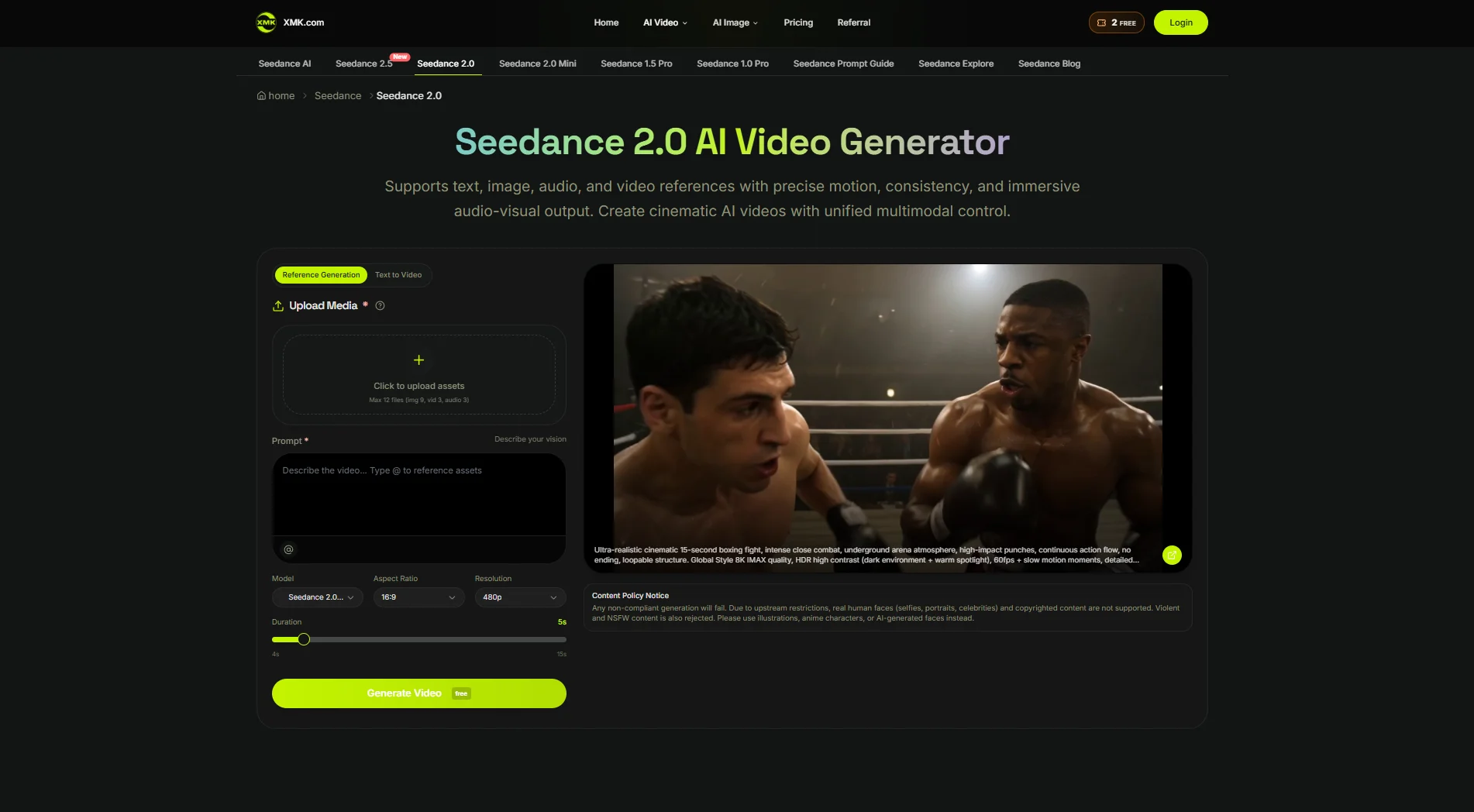
This issue becomes visible in a multimodal system such as Seedance 2.0, which accepts text, image, audio and video references and allows creators to describe how those materials should shape motion, atmosphere and scene structure. The technology can make direction more precise. It also makes vague contracts harder to defend.
Reference Files Are Not Just Inspiration
A mood board used in a private meeting is different from a file uploaded to a generation platform driven by digital innovation. Once an asset becomes a model input, the team should know who owns it, who supplied it and whether the planned use falls within the permission granted.
That question cannot be answered by file possession alone. A client may own a finished advertisement without owning every song, photograph or performance used to create it. An agency may have a licence limited to one campaign, territory or channel. A freelancer may provide a reference for internal review but not for derivative production.
The safest approach is to treat every uploaded asset as a production input with its own rights record. The record does not need to be elaborate. It should identify the asset, source, owner, licence or consent basis, permitted use and any expiry or territorial limit.
The Brief Should Define the Role of Each Asset
Rights management becomes easier when creative direction is specific. If an image is used only to preserve a product’s shape, record that purpose. If a video guides camera movement but not costume, performers or setting, say so. If audio establishes pacing, distinguish that role from copying a composition or voice.
The platform supports text, image, audio and video references in one generation. That flexibility makes role assignment part of both prompting and governance. A prompt that explains each reference is easier to reproduce, review and connect to the relevant permission.
This also reduces a common dispute after delivery: the claim that a particular source influenced the output more than the client expected. A clear reference manifest cannot eliminate every disagreement, but it gives the team a shared record of intent.
Client Contracts Need More Than an Output Clause
Many creative agreements concentrate on ownership of the finished video. Reference-based generation introduces several earlier questions:
- Who is responsible for confirming rights in client-supplied inputs?
- May the agency upload those inputs to a third-party platform?
- Can the materials be used only for this project or for future variations?
- Who approves the prompt, references and generated draft?
- What happens when the output contains an inaccurate logo, person, product detail or claim?
- How long should input files, prompts and generated versions be retained?
These points belong in the statement of work or production terms, not in an email written after a problem occurs. The agreement should allocate responsibilities without pretending the tool can guarantee factual or legal suitability.
Platform Rules and Project Permissions Are Different
Seedance 2.0 states that real human faces, including selfies, portraits and celebrities, are not supported because of upstream restrictions. Copyrighted, violent and NSFW content is also rejected. These platform rules provide an important boundary, but compliance with them does not automatically settle every contractual issue.
A file may pass a technical upload check and still fall outside a client’s licence. An illustrated character may not be a real face but can still belong to another rights holder. An original audio recording may include a performer whose consent does not cover synthetic adaptation.
Project approval therefore needs two separate checks: whether the platform permits the input and whether the organisation has the right to use it for the intended purpose.
Version Records Are Part of the Legal Story
AI projects can produce many variations quickly. Without a version record, the team may not know which prompt and references created the published clip. That uncertainty makes it harder to respond to a rights complaint, reproduce an approved result or explain why a disputed detail appeared.
A lightweight generation log can capture:
- project and version number;
- date and responsible operator;
- reference asset identifiers;
- prompt or creative instruction;
- output file name;
- review notes and approval status;
- where the final version was published.
The log should use stable file names rather than labels such as “final-new” or “approved-2.” A structured name linking the project, asset role, version and status is easier to audit and hand over.
Approval Must Cover More Than Visual Quality
A client may approve the look of a clip while assuming someone else checked the rights and factual details. To avoid that gap, approval should be divided into clear categories.
Creative approval covers story, style, pacing and brand fit. Asset approval confirms that inputs were authorised. Factual approval covers products, labels, demonstrations and claims. Publication approval confirms the intended channel, audience and any required disclosure.
One person may perform several roles on a small team, but the questions should not disappear. A single “looks good” message is not a reliable substitute for documented approval.
Targeted Edits Need Their Own Review
Seedance 2.0 presents workflows for extending clips, merging sections and refining selected parts without rebuilding the entire project. That can make revision more efficient, but it can also create the impression that an approved video remains approved after a small change.
A product replacement, background alteration or new audio cue may affect rights, accuracy or the meaning of the scene. The contract should distinguish minor technical correction from a substantive creative change. The team should record which approvals must be renewed after each type of edit.
This is particularly important when one master clip is adapted for several markets or clients. A change that is harmless in one context may be misleading or unauthorised in another.
A Practical Contract Checklist
Before starting a reference-based AI video project, an agency or internal team can confirm five points:
- Every input has a named source and a documented permission basis.
- The brief explains the intended role of each reference.
- The agreement assigns responsibility for input rights and output review.
- Prompts, references, versions and approvals will be retained in a consistent record.
- The final clip will be checked for factual accuracy, rights issues and audience disclosure before publication.
This is operational guidance rather than a substitute for jurisdiction-specific legal advice. The right contract language depends on the parties, assets, platform terms and intended use.
The Contract Should Follow the Workflow
AI video does not remove the familiar legal questions of ownership, consent and responsibility. It changes where those questions appear. They now begin with the reference pack and continue through prompts, generations, targeted edits and publication.
A well-managed Seedance 2.0 review workflow can connect creative direction to a clear record: what entered the system, what each asset was meant to do, which version was approved and who accepted responsibility for release.
The strongest contract is not the one with the most AI terminology. It is the one that accurately describes how the team actually works.