

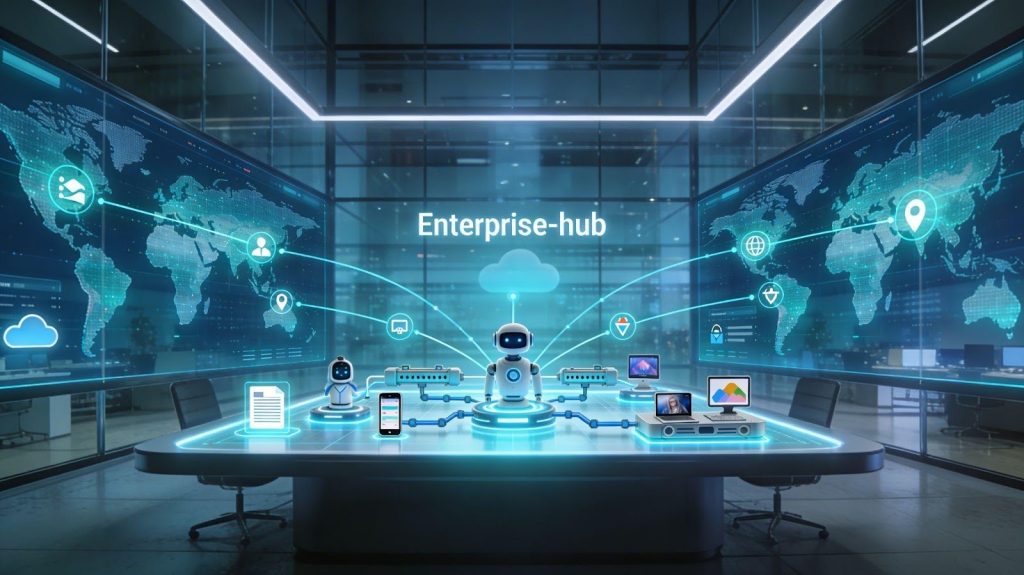
Modern multinational corporations are rarely defined by geography alone. Borders blur as companies operate across dozens of markets, serving customers who speak different languages, expect different cultural cues, and operate under separate legal frameworks. Consider a scenario: a global enterprise must simultaneously launch a new product in 20 countries, update its HR policies for a remote workforce, and roll out a region‑specific marketing campaign – all while maintaining brand consistency and complying with local regulations. The challenge is no longer just “translate this document”; it’s how to orchestrate translation at scale, across systems, departments, and time zones, without losing control over quality, security, or cost.
This is where enterprise translation enters the picture – not as an occasional need for a marketing brochure, but as a core, strategic function that spans the entire organization. It is the framework that enables large companies to communicate cohesively with customers, employees, partners, and regulators in every market they serve. When done well, it becomes the backbone of a global communication strategy, ensuring that every word – from a product UI string to a legal clause – reflects the brand’s voice, legal obligations, and operational standards.
What Sets Enterprise Translation Apart?
At first glance, translating content for a multinational might seem like an expanded version of what a small business does: add more languages, more projects, and more translators. In practice, however, corporate localization operates on an entirely different level of complexity. The differences lie in volume, variety, integration, and governance – not just in the number of languages involved.
One of the most immediate distinctions is scale and volume. A small‑business translation project might involve tens of thousands of words per year across a handful of materials. A large enterprise, by contrast, can produce millions of words annually, spread across thousands of assets: product documentation, user interfaces, knowledge‑base articles, training materials, marketing campaigns, legal contracts, and internal communications. Managing this volume manually – through spreadsheets, email chains, and ad‑hoc workflows – quickly becomes unsustainable. Organizations need systems that can ingest, track, and prioritize content at scale, while still preserving quality and consistency across every region and language pair.
Equally important is the diversity of content types. In a global organization, translation is not limited to marketing copy. It includes highly regulated legal and compliance documents, technical manuals, safety instructions, privacy notices, software UI strings, and internal HR policies. Each category has its own requirements for tone, accuracy, and review processes. A marketing message may emphasize brand voice and cultural nuance, while a regulatory document demands precision and strict alignment with local legislation. Managing these different content types with a single, fragmented process leads to inconsistent terminology, conflicting styles, and increased risk of error across markets.
Then there is the integration complexity. Large enterprises typically operate on a complex technology stack: content management systems (CMS), customer relationship management (CRM) platforms like Salesforce, product information management (PIM) systems, digital experience platforms, e‑commerce engines, and code repositories such as GitHub. Content flows continuously between these systems, and translation cannot be treated as a one‑off, offline activity. Instead, it must be embedded into existing workflows, so that when a product description is updated in the PIM, the change is automatically pushed to the translation pipeline, and the resulting translations are fed back into the CMS or storefront without manual intervention.
This complexity is why many large firms turn to specialized enterprise translation services that offer more than just language expertise – they provide strategic consulting, technology integration, and workflow security. Unlike traditional translation agencies that focus primarily on linguistic output, enterprise‑grade providers help organizations design scalable localization architectures, integrate with existing tools, and centralize governance over terminology, style, and quality metrics. This shift – from hiring translators on a project‑by‑project basis to embedding multilingual workflows into the enterprise operating model – is what distinguishes mature corporate localization from smaller‑scale language work.
Another critical differentiator is the requirement for centralized management of linguistic assets. In an environment where marketing, product, legal, and support teams all produce content, the risk of terminology drift is high. One department may use the term “account” while another uses “profile,” even though both refer to the same concept. To maintain consistency across regions and channels, enterprises rely on centralized glossaries and Translation Memories (TMs). TMs store previously translated segments, enabling reuse and reducing both cost and turnaround time. When these assets are managed in a single source of truth – accessible to all relevant teams and integrated into the Translation Management System (TMS) – global communication becomes noticeably more coherent and efficient.
Finally, while small‑business translation often emphasizes speed and price, large-scale translation programs prioritize control, visibility, and auditability. Decision‑makers need to see where content is in the localization pipeline, who has approved it, and how it aligns with regulatory standards. They also need to control costs across multiple departments and regions, ensuring that efforts are not duplicated and that budgets are allocated strategically. This level of oversight is only possible when translation is treated not as a tactical task, but as a strategic, company‑wide function.
The Four Pillars of a Successful Enterprise Translation Strategy
A robust multilingual strategy rests on four interdependent pillars: centralized technology, security and compliance, seamless integration and workflow automation, and a balanced blend of AI‑driven efficiency with human expertise. These pillars work together to create a scalable, secure, and high‑quality localization environment suitable for large organizations.
Pillar 1: Centralized Technology (The TMS Backbone)
The center of gravity in any corporate localization program is the Translation Management System (TMS). A TMS serves as the single source of truth for all translation activities, enabling teams to manage assets, assign tasks, track progress, and enforce quality standards from one unified platform. For multinational corporations, this centralization is not a convenience – it is a necessity.
A modern TMS must support automation, API access, real‑time collaboration, and version control. Automation capabilities allow organizations to route content automatically based on predefined rules, such as assigning multilingual content to regional language teams or escalating high‑priority items to senior linguists. API access enables deep integration with other systems, so that content can be pulled from or pushed into the TMS without manual exports and imports. Real‑time collaboration tools allow translators, reviewers, and subject‑matter experts to work together concurrently, reducing bottlenecks and improving turnaround times. Version control ensures that teams always translate the latest version of a document or UI string, preventing inconsistencies that arise when multiple versions are in circulation simultaneously.
Beyond managing projects, a TMS also plays a critical role in linguistic asset management. Centralized glossaries, style guides, and Translation Memories live within the platform, ensuring that terminology and style are applied consistently across all content and locales. This consistency is essential for maintaining brand identity and reducing the cognitive load on customers who interact with the company in multiple languages.
Pillar 2: Security and Compliance
For large enterprises, security is not an afterthought – it is a foundational requirement. Localization workflows often involve sensitive corporate data, customer information, and regulated content such as financial disclosures, medical records, or legal contracts. Any breach can lead to reputational damage, regulatory penalties, and loss of customer trust.
Multilingual workflows must therefore comply with strict data‑protection standards such as GDPR, HIPAA, CCPA, and industry‑specific regulations. This means that data must be stored, processed, and transmitted in accordance with data sovereignty requirements, often limiting where localized content can reside or be accessed. TMS platforms used at the enterprise level frequently offer features like encrypted data storage, role‑based access controls, audit trails, and secure file transfer protocols to protect content throughout the translation lifecycle.
Compliance also extends to quality assurance and certification. Many large organizations require that their language partners meet ISO standards such as ISO 17100 or ISO 27001, which define requirements for translation service providers and information security management. These certifications provide assurance that linguistic quality is maintained through structured processes and that security controls are rigorously enforced.
Pillar 3: Seamless Integration & Workflow Automation
The true value of a mature localization program emerges when it is embedded into the broader technology ecosystem. Rather than treating translation as a separate, manual step, modern organizations build continuous localization pipelines that connect the TMS to their CMS, CRM, PIM, e‑commerce platforms, and code repositories.
Consider a software company that releases weekly updates to its application. Every new feature introduces new UI strings that need translation. Instead of exporting these strings manually, the engineering team can configure the development workflow so that code commits automatically trigger a localization job in the TMS. Once translations are completed and approved, they are pushed back into the codebase or content repository, ready for deployment. This automation reduces delays, minimizes human error, and ensures that localized versions move in lockstep with product releases.
The same logic applies to marketing and support content. When a new landing page is published in the CMS, the TMS can automatically detect the change, create a translation job, and, once completed, publish the localized version to the relevant regional site. Customer support articles can be updated globally with a single edit, thanks to tightly integrated knowledge‑base and ticketing systems. By embedding translation into everyday workflows, enterprises eliminate the need for separate localization sprints and create a continuous flow where updated content is translated and published automatically.
Pillar 4: Combining AI Efficiency with Human Expertise
The rise of artificial intelligence and large language models has transformed the localization landscape. Machine translation (MT) and AI‑driven tools can now produce high‑quality first drafts at unprecedented speed, dramatically reducing the time and cost associated with certain types of content. However, in a corporate context, AI is rarely used in isolation.
Leading organizations adopt a hybrid model that combines AI‑enabled workflows with professional human linguists. AI handles repetitive, high‑volume tasks such as translating standard UI strings, product descriptions, or FAQs, while human experts focus on preserving brand voice, handling nuanced cultural references, and ensuring compliance with legal and regulatory requirements. This division of labor allows enterprises to scale their localization efforts without sacrificing quality or brand integrity.
Modern TMS platforms often integrate directly with MT engines and AI‑powered editing tools, enabling post‑editing workflows that blend machine output with human refinement. These integrations also support quality estimation features that flag segments requiring additional review, helping linguists prioritize their efforts and concentrate on the content that matters most.
The Business Impact: Measuring the ROI of Enterprise Translation
Investing in a structured localization strategy is not just a technical or linguistic decision; it is a business‑driven one. The return on investment extends well beyond a simple cost‑per‑word metric and touches multiple areas of performance, including revenue, customer experience, operational efficiency, and risk management.
Revenue growth is one of the most direct impacts. When localization is integrated into product development and marketing workflows, companies can launch in multiple markets simultaneously rather than staggering releases by language. This agility enables them to capture first‑mover advantages in emerging markets and align with regional demand cycles. Localized websites and campaigns consistently deliver higher conversion rates and larger average order values compared to untranslated counterparts.
Customer experience improves when users encounter consistent terminology, tone, and style across product interfaces, support materials, and marketing touchpoints. Customers who access help in their preferred language are more satisfied, less likely to abandon products or services, and more likely to remain loyal over time. This is especially important in regulated industries such as healthcare, finance, and telecommunications, where clarity and accuracy directly impact safety and compliance.
Operational efficiency follows from automation and centralized asset management. Redundant translation work is eliminated as previously translated content is reused consistently. Review workflows are streamlined with clear roles and responsibilities defined within the TMS. These efficiencies translate into shorter turnaround times, lower overhead costs, and the capacity to scale without proportional increases in administrative burden.
Risk mitigation rounds out the business case. Inaccurate or non‑compliant translations can lead to fines, litigation, or brand damage, particularly in highly regulated sectors. A mistranslated privacy notice may violate GDPR requirements, while a poorly rendered safety instruction can pose real‑world hazards. Centralized governance and audit trails ensure that critical content is reviewed by qualified experts before publication, reducing exposure to these risks significantly.

Overcoming Common Pitfalls in Enterprise Translation
Even well‑resourced organizations encounter recurring challenges when scaling their multilingual operations. Recognizing these issues early is essential to building a sustainable global communication strategy.
Siloed departments remain one of the most persistent problems. Marketing, product, legal, and support teams often operate independently, each managing translation according to its own priorities and processes. This fragmentation leads to inconsistent terminology, conflicting messaging, and duplicated work. A unified localization strategy must establish cross‑functional governance structures, shared glossaries, and centralized workflows that cut across all departments.
Scalability challenges emerge as companies expand into new markets or broaden their product portfolios. Traditional, ad‑hoc approaches quickly become overwhelmed by increasing content volumes. To avoid this, organizations must select cloud‑based platforms and modular workflows that scale automatically with business growth, without requiring costly system overhauls at every inflection point.
Vendor management is the third common pitfall. Many companies begin by working with dozens of individual freelancers or small agencies, each with its own processes and standards. Over time, this becomes difficult to manage and monitor effectively. Consolidating into streamlined partnerships with a small number of enterprise‑grade providers – or migrating to a centralized platform – improves consistency, reduces administrative overhead, and enables tighter control over quality and security.
Conclusion: From Cost Center to Global Growth Enabler
Enterprise translation is no longer a peripheral activity reserved for occasional campaigns or product launches. It has evolved into a strategic, company‑wide function that underpins global communication, customer experience, and operational efficiency. For multinational corporations, the ability to communicate consistently and accurately in multiple languages is not optional – it is a competitive necessity.
By investing in a centralized TMS, enforcing robust security and compliance standards, integrating localization into existing workflows, and combining AI efficiency with human expertise, organizations can transform their multilingual programs from a cost center into a global growth enabler. The companies that treat translation as a core component of their globalization strategy – backed by the right technology, processes, and partnerships – will be best positioned to connect authentically with customers in every market they serve.
