

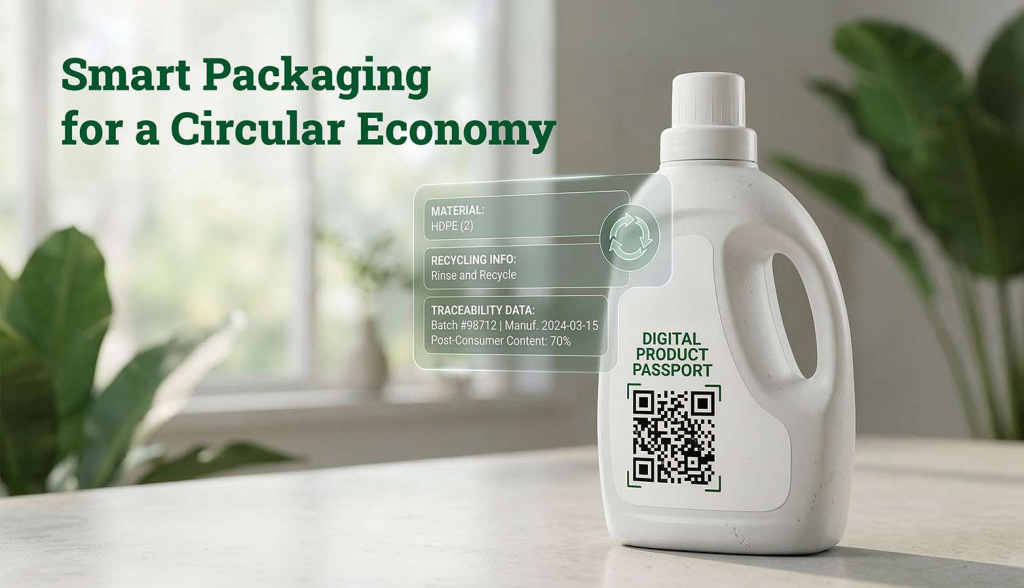
Packaging isn’t what it used to be. A few years back, it was mostly about protection and shelf appeal. Now it’s expected to track products, connect with consumers, and maybe even give real-time info. That shift has been fast. That’s where smart packaging comes in. But here’s the part that usually gets skipped in meetings or strategy decks. What happens after that packaging is used?
Because no matter how advanced it looks or how well it performs upfront, if it ends up sitting in a landfill or gets rejected at a sorting unit, the value kind of drops off. Many conversations about smart packaging focus on the front end. But the backend? That’s where things either hold up or don’t.
The Promise of Smart Packaging
There’s a reason brands are investing in this space. Smart packaging can track movement across the supply chain, improve transparency, and even help with authentication. For industries dealing with compliance or traceability, that’s a big deal.
And from a consumer side, it builds trust. Scan a code, get product details, check origin. Simple things, but they matter.
Still, there’s a gap. If the material used in that packaging isn’t compatible with recycling systems, or if it’s too complex to process, it creates friction later. And that friction shows up as cost, delays, or even rejection of entire material batches.
So yes, smart packaging adds value. But only if the system around it can handle it properly after use.
Why Recycling Systems Matter More Than You Think
Every piece of packaging, no matter how advanced, turns into waste at some point. That’s just how it works. The real question is what happens next.
Right now, most recycling systems deal with mixed waste, inconsistent segregation, and contamination issues. Not ideal.
For smart packaging to actually deliver long-term value, these systems need to work better.
That means:
- Cleaner input streams.
- Better sorting processes.
- An infrastructure that can handle different material types without slowing everything down.
Because when the backend isn’t working properly, even the nicest-looking packaging kind of loses its value after you throw it away.
Design vs Reality: Where Things Break
This is where many businesses struggle. On paper, a packaging idea can look perfect. Clean design, smart features, maybe even labeled as eco-friendly.
Multi-layer materials, mixed polymers, and labels that interfere with recycling; it all adds up.
And suddenly, something that looked like a good idea becomes difficult to process.
That’s why smart packaging needs to align with how recycling actually works, not how we assume it works.
When design and system realities match, recovery improves, material quality improves, and operations feel less chaotic.
Business Perspective: What This Means for You
If you’re dealing with packaging at scale, you already know the pressure points.
Rising raw material costs.
Unpredictable supply chains.
Regulatory pressure.
Customer expectations keep increasing.
In that setup, packaging decisions aren’t just branding choices. They affect procurement, production, and even compliance reporting.
When recycling systems are strong, businesses see:
- Better quality recycled inputs.
- More consistency in supply.
- Less dependence on fresh raw materials.
That’s where smart packaging starts to make more sense. Not just as an innovation layer, but as part of a system that supports operational stability.
What’s Changing on the Ground
There’s movement happening, slowly but steadily. In India, companies like Banyan Nation are trying to fix this gap. They’re not just collecting plastic waste; they’re working on how it’s actually processed and reused. That extra step matters more than people think.
Because here’s the thing. If the material quality isn’t consistent, it becomes hard for businesses to reuse it. And when that trust isn’t there, everything slows down, recycling doesn’t scale, and systems don’t improve.
This is where smart packaging connects with recycling in a real way. It’s not just about tech or design anymore. It’s about making sure materials can actually flow back into production without too many issues.
The Way Forward
So, no doubt, innovation in packaging is important. But it’s only one part of the story.
If businesses want real impact, they need to look at the full lifecycle. From design to disposal to reuse. Not just the first half.
That means working with better recycling systems, investing where needed, and making decisions that match how materials are actually handled on the ground.
Because without that, even the most advanced smart packaging solutions won’t deliver what they promise.
Conclusion
Packaging is changing fast. But for that change to actually work, the systems behind it need to keep up. Otherwise, it’s just surface-level progress. Stronger recycling systems make sure materials don’t just get collected but are actually reused in a way that supports business needs, too. Banyan Nation, as a leading recycling company, is already pushing in that direction by focusing on quality and consistency in recycled materials. That’s what makes the system more reliable. And that’s why smart packaging only works when everything around it works too.