

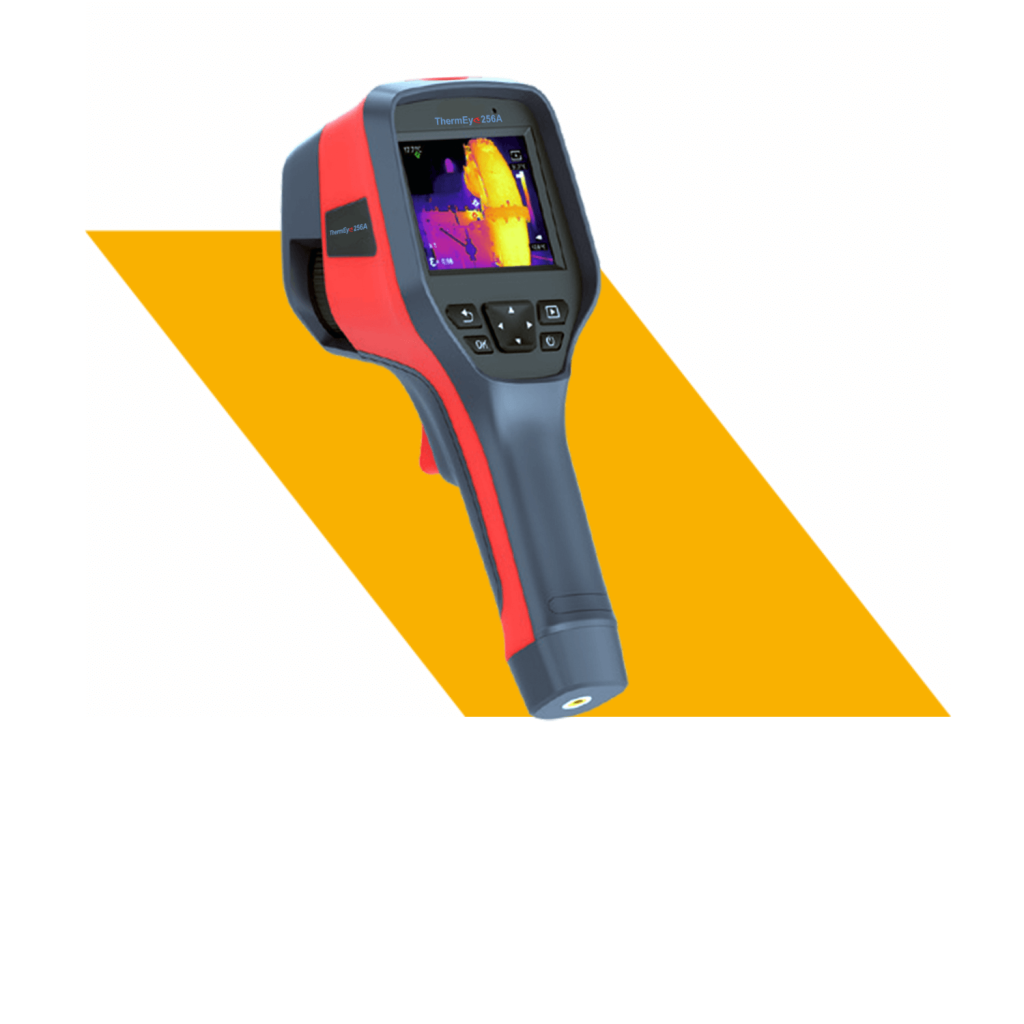
A portable thermal imaging camera does something simple, but powerful. It helps you see heat patterns that your eyes cannot catch. That matters when a motor is running hot, a panel connection is loosening, or a furnace surface starts behaving differently than it should. Thermal imaging turns invisible heat into a visible image, which makes faults easier to spot before they turn into breakdowns, safety issues, or expensive downtime. Thermal cameras work by detecting infrared energy, converting it into an electronic signal, and then processing that signal into a thermal image that shows temperature differences across a scene.
Here’s the thing. People often think of a portable thermal imaging camera as a niche tool. It is not. It has become a practical field device for maintenance, utilities, building diagnostics, security, firefighting, industrial inspection, and research. Tempsens positions its thermal imagers for industrial use, while handheld thermal cameras are also widely used by electricians, building inspectors, maintenance professionals, first responders, and field teams that rely on fast, non-contact diagnostics.
How a portable thermal imaging camera works
Every object above absolute zero emits infrared energy. A thermal camera captures that energy, sends it through optics to a detector, and converts the signal into a thermogram that shows surface temperature differences. That is the science, yes, but the value is very practical. You are not guessing where the issue might be. You are seeing temperature contrast in a way that helps you act faster and more safely. The core mechanism remains the same: infrared radiation is collected, converted into an electronic signal, and then displayed as a thermal image for interpretation.
That non-contact nature is a big part of the appeal. You can inspect energized systems, moving equipment, hard-to-reach surfaces, and wide plant areas without physically touching the asset. Tempsens also frames portable thermal imaging camera solutions around maintenance and troubleshooting, which fits exactly with how technical users search for this category.
Why portability matters in real inspections
A fixed thermal system has its place, especially in continuous process monitoring. But portability changes how thermal inspection fits into daily work. A handheld unit can move from one motor, panel, pipe run, or structural zone to the next in minutes. It works well for spot checks, route-based inspections, shutdown preparation, and fault verification after repairs.
That matters because real inspections are rarely done in ideal conditions. You might be working near switchgear, outdoors in a utility yard, across a cement plant, inside a building envelope, or on a service call where time is tight. Portable thermal imagers are valuable precisely because they reduce friction. You can carry them, power them up quickly, scan the target, and compare what is normal against what looks off. That flexibility is one reason handheld thermal cameras remain the most popular format in the broader thermal imaging market.
Where these cameras deliver the most value
Electrical inspection is still one of the clearest use cases. Loose connections, overloaded circuits, phase imbalance, and rising resistance often create abnormal heat before visible damage appears. Electricians and maintenance teams use thermographic cameras to locate hot spots in panels and wiring, while electrical troubleshooting remains one of its core professional uses.
Mechanical systems are another strong fit. Bearings, couplings, misalignment, and friction-related issues often show up thermally before they become obvious through noise or failure. Thermal imaging also supports building diagnostics by revealing insulation gaps, moisture patterns, air leakage paths, and HVAC issues. Tempsens specifically points to building diagnostics as one of the sectors supported by its thermal imager portfolio.
Then there is heavy industry. Tempsens highlights applications across cement, power, glass, iron, and oil and gas for maintenance activity, and its broader thermal-imager content also points to furnace monitoring, electrical inspections, and industrial monitoring. In these environments, the value is not only speed. It is also an exposure reduction. A non-contact scan helps teams assess hot zones without stepping too close to risk.
What to check before buying one
Resolution comes first for a reason. Higher resolution gives you more detail, which matters when you are trying to isolate a small hot spot in a crowded scene. Fluke notes that higher-resolution cameras provide clearer images and help reveal smaller temperature differences. Tempsens’ own handheld line reflects this progression, from models such as ThermEye 256 and 256M at 256×192, to 384M at 384×288, to 480 at 480×360, and 640M at 640×512.
Sensitivity matters almost as much. A camera with stronger thermal sensitivity can pick up smaller temperature differences, which is crucial in predictive maintenance and early fault detection. Alongside that, check the temperature range, focus method, field of view, and reporting workflow. Some Tempsens handheld units are manual-focus, while others are focus-free and built around fast touch-screen use, which can be useful depending on whether you need precision targeting or quicker routine scans.
Battery life, image analysis, and data handling should not be treated as minor details. They shape how often the tool gets used in the field. The ThermEye 256, for example, is surfaced with an 11-hour battery and multiple display modes including thermal imaging, thermal fusion, picture-in-picture, and visible image mode. Those are practical features, not brochure filler. They affect inspection flow on the ground.
Why Tempsens is a credible brand for this category
Tempsens positions itself as a thermal engineering manufacturer with industrial temperature-measurement expertise and a dedicated thermal imager portfolio for industrial use. Its portable range is framed around non-contact inspection, maintenance, and troubleshooting, and its current search-visible lineup shows handheld options across several resolution and feature tiers. That gives buyers a stronger path than a one-size-fits-all product pitch.
A good portable thermal imaging camera should not only capture heat. It should help you decide faster, inspect more safely, and act before small anomalies grow into costly failures. That is the real case for this technology, and it is why this category keeps getting more important across maintenance, utilities, buildings, and industry.