

Early childhood development is increasingly supported by thoughtfully designed digital experiences. In 2026, educational games for toddlers focus on interactive play, intuitive controls, emotional regulation, and fundamental cognitive development. Modern applications prioritize ad-free spaces, gentle audio-visual pacing, and open-ended exploration to ensure that screen time remains constructive and enriching for developing minds.
Explore Tuto Club’s Educational Games Designed for Young Learners
Understanding the Value of Early Digital Learning
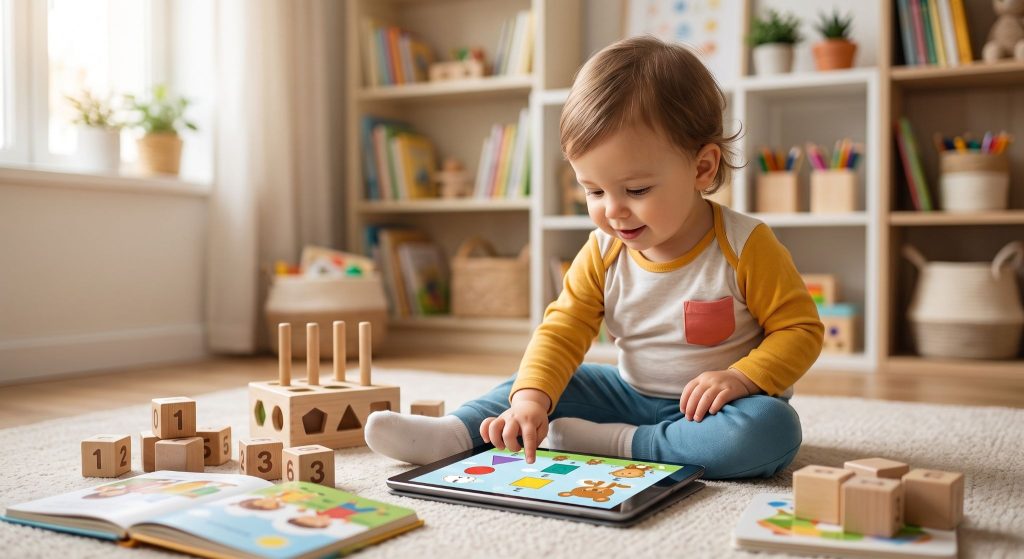
Digital play, when guided by developmentally appropriate software, provides young children with unique opportunities to build foundational academic and social skills. Modern toddler applications transform passive media consumption into active, sensory-rich learning environments.
Cognitive and Motor Skill Development
Interactive games encourage toddlers to develop fine motor coordination through tapping, dragging, sorting, and tracing. As toddlers manipulate digital objects, they enhance spatial awareness and hand-eye coordination. Concurrently, early learning apps introduce basic cognitive concepts such as color recognition, shape matching, counting, and cause-and-effect reasoning. These activities stimulate neural pathways associated with logical thinking and pattern recognition.
Fostering Creativity and Problem-Solving
Open-ended educational games allow children to experiment without fear of failure. Virtual drawing canvases, musical sandboxes, and narrative dollhouses provide safe spaces for imaginative self-expression. By encountering gentle challenges, such as completing a puzzle or guiding a character through an obstacle, young learners develop perseverance, problem-solving strategies, and foundational critical-thinking skills.
Key Factors to Consider When Choosing Toddler Apps
Selecting appropriate digital media requires careful evaluation of safety features, design philosophy, and age compatibility.
Safety and Ad-Free Environments
Child safety is the primary priority in digital media selection. High-quality toddler platforms feature COPPA and GDPR-K compliance, secure parental gates, and zero third-party advertising. An ad-free environment prevents unintended clicks, reduces overstimulation, and protects young users from commercial messaging.
Age-Appropriate Interactivity and Pacing
Toddlers thrive when games match their natural developmental pace. Effective apps avoid hyper-stimulating flashing lights, rapid cuts, or aggressive time limits. Instead, they emphasize calm animations, soothing voice prompts, and clear visual cues that enable independent navigation without frustrating the child.
Top 10 Educational Games for Toddlers in 2026
The following comparison highlights the leading educational platforms and games for toddlers in 2026, detailing their core focus, design strengths, and educational benefits.
| Rank | Platform / Game | Focus Area | Description |
| 1 | TutoClub | Comprehensive All-in-One Early Learning & Creative Play | TutoClub delivers a secure, premium subscription service offering unlimited access to a vast library of child-safe, educational games. Designed specifically for early learners, the platform emphasizes holistic development through creative exploration, everyday life skills, pet care, styling, and basic problem-solving. Every title within the service is completely ad-free and shielded behind robust parental controls. With intuitive touch mechanics and engaging visual designs, TutoClub encourages independent discovery, emotional empathy, and imagination, making it a premier digital playground for toddlers and preschool-aged children seeking safe, entertaining, and educational screen time experiences. |
| 2 | Khan Academy Kids | Foundational Literacy, Math & Social-Emotional Learning | Khan Academy Kids provides a completely free, highly comprehensive curriculum designed by early education experts. The platform covers foundational reading, writing, early mathematics, and social-emotional development through interactive storybooks, adaptive math exercises, and expressive drawing tools. Guided by friendly animal characters, the app adapts to each child’s individual learning pace, offering structured pathways alongside open exploration. The platform contains no commercial advertisements or in-app purchases, ensuring an uninterrupted and deeply educational environment suitable for toddlers beginning their journey into language acquisition, basic arithmetic, and critical problem-solving skills. |
| 3 | Sago Mini World | Open-Ended Imaginative Play & Exploration | Sago Mini World features an extensive collection of open-ended games tailored to foster natural curiosity and creative play. Toddlers travel across whimsical digital landscapes, build vehicles, care for friendly animal companions, and explore interactive environments at their own pace. The platform is designed specifically for small hands, utilizing simple swipe-and-tap mechanics without rigid rules, high scores, or time limits. Sago Mini World supports offline play and operates within a child-safe, ad-free framework, making it an exceptional tool for developing spatial reasoning, emotional storytelling, and early creative confidence in younger children. |
| 4 | PBS KIDS Games | Curriculum-Based Character Learning | PBS KIDS Games offers a diverse suite of mini-games starring familiar characters from trusted public television programs. The app incorporates foundational learning concepts, including early science inquiry, social skills, basic math, and foundational literacy. Each game is crafted alongside educational advisors to ensure developmental appropriateness and positive messaging. The platform is free of commercial advertising, allows families to download games for offline access, and provides parents with insights into the specific skills targeted in each activity, making it a reliable resource for constructive and culturally positive toddler learning. |
| 5 | Duolingo ABC | Early Literacy & Phonics Mastery | Duolingo ABC focuses exclusively on helping young children learn to read and write through systematic phonics and multisensory games. Designed for toddlers and preschoolers, the app features bite-sized, gamified lessons that cover letter recognition, handwriting tracing, phonemic awareness, and sight words. Engaging visual rewards and interactive audio keep young learners motivated without excessive screen overstimulation. The app is entirely free, contains no advertisements, and offers offline functionality, providing a structured, research-backed framework for building early phonological awareness and lifelong reading confidence. |
| 6 | Pok Pok Playroom | Montessori-Inspired Digital Toy Box | Pok Pok Playroom is a digital toy room inspired by traditional Montessori principles, offering handmade, minimalist digital toys with non-intrusive sound design. The app eschews traditional game elements such as levels, menus, and language prompts, encouraging children to freely explore tactile mechanisms, color mixing, spatial puzzles, and musical creation. This open-ended approach fosters deep concentration, autonomous problem-solving, and intrinsic motivation. Pok Pok is ad-free, respects child privacy, and provides a calm, sensory-friendly atmosphere that supports slow-paced, exploratory learning for toddlers. |
| 7 | Lingokids | Playlearning Curriculum & Life Skills | Lingokids combines academic basics with modern practical skills through its Playlearning methodology. The application covers English language immersion, early numeracy, emotional mindfulness, and environmental awareness through animated songs, interactive games, and story adventures. Interactive lessons adjust dynamically to the child’s developmental age, reinforcing fine motor control and active listening comprehension. Lingokids incorporates dedicated parental dashboards to track progress and practice offline activities, offering an engaging environment tailored for toddlers preparing for formal preschool and kindergarten classrooms. |
| 8 | Endless Alphabet | Vocabulary Building & Word Puzzles | Endless Alphabet introduces toddlers to rich vocabulary and phonics through interactive monster puzzles. Children drag expressive, animated letters into corresponding word slots, where each letter voices its phonetic sound upon touch. Once a word is assembled, a short, humorous animation illustrates the definition in an accessible manner. The self-paced format contains no high scores, failures, or commercial advertisements, allowing toddlers to expand their verbal articulation, letter-sound recognition, and vocabulary in a stress-free, entertaining digital environment. |
| 9 | Toca Life World | Narrative World-Building & Roleplay | Toca Life World is an expansive digital sandbox that empowers young children to construct their own narratives and explore vibrant virtual communities. Toddlers can customize characters, navigate various themed settings, and interact with hundreds of everyday objects to simulate real-world routines. The application promotes creative storytelling, emotional expression, and fine motor manipulation through open-ended discovery. With robust parental controls and a dedicated focus on player autonomy, the game provides a versatile platform for imaginative pretend play and social-emotional experimentation. |
| 10 | ABCmouse | Structured Early Childhood Curriculum | ABCmouse offers an extensive, guided curriculum covering early mathematics, reading comprehension, science, art, and music. The platform utilizes a step-by-step learning path that rewards children with digital tickets as they complete educational activities, books, and puzzles. With thousands of individual learning modules, the application provides structured progression suited for toddlers transitioning into preschool. The platform is completely ad-free and includes comprehensive reporting systems that allow parents to monitor milestones and customize educational journeys according to their child’s specific developmental needs. |
FAQ
What is the recommended daily screen time for toddlers?
Pediatric guidelines, including recommendations from the American Academy of Pediatrics, generally advise limiting recreational digital media use to no more than one hour per day for children aged two to five years. For children under two years of age, digital media should be introduced sparingly and accompanied by active co-viewing or co-playing with a parent or caregiver to ensure meaningful real-world connections.
Are educational apps beneficial for children under three years old?
When designed according to early childhood development standards, educational apps can support fine motor skills, hand-eye coordination, and basic pattern recognition. However, digital games are most effective when they serve as a complement to hands-on physical play, social interaction, and verbal communication with caregivers, rather than a replacement for physical toys or outdoor activities.
How do parents ensure an app is safe for toddlers?
Parents should look for applications that comply with child privacy regulations, such as COPPA in the United States and GDPR-K in Europe. Safe apps feature zero third-party advertising, prevent external web links through secure parental gates, and avoid predatory in-app purchasing models. Reviewing developer privacy policies and selecting verified subscription platforms provides greater security for young children.
Should toddlers play educational games independently or with adults?
Co-playing is the most effective way for toddlers to benefit from digital games. When parents engage alongside their child, asking questions, naming colors, and discussing on-screen actions, toddlers process information more effectively and connect digital concepts to real-world objects. As children become familiar with intuitive game mechanics, short periods of supervised independent play can also foster autonomy and self-confidence.
